IBS symptom diary: what to track and how it helps
Irritable bowel syndrome (IBS) symptoms come and go, and triggers vary from person to person. That is exactly why the NHS suggests keeping a diary. Here is what IBS usually involves, what to write down, and how to turn weeks of notes into something useful.
Updated October 25, 2026 · 6 min read · By the Log For Your Log team · 8 sources
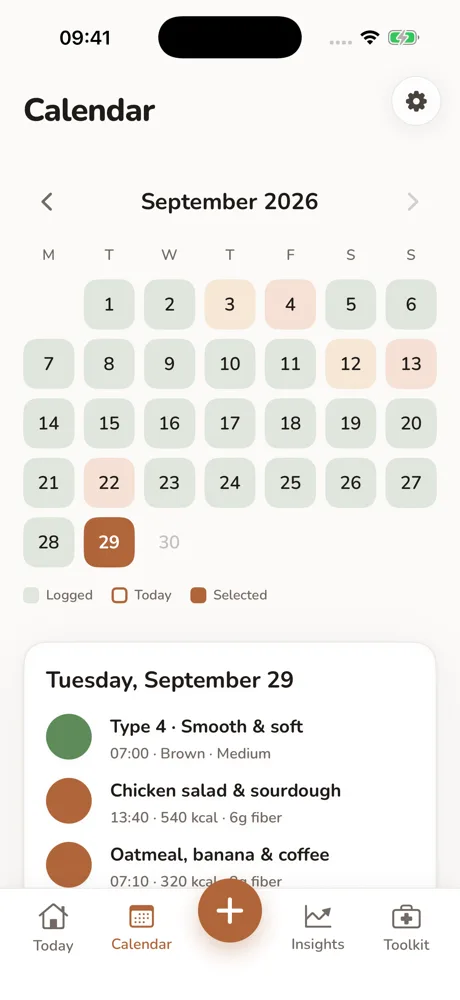
 Keep your IBS diary on the phone that is always with you. Free on iPhone.Get the app

General information, not medical advice. This page can help you notice patterns and talk with a clinician. It cannot tell you what is causing a symptom.
What IBS is
NIDDK describes IBS as a group of symptoms that occur together, including repeated pain in your abdomen and changes in your bowel movements, which may be diarrhea, constipation or both, without visible signs of damage or disease in your digestive tract. It is a disorder of gut-brain interaction, related to problems with how your brain and gut work together.
The NHS lists the main symptoms as:
- Stomach pain or cramps, usually worse after eating and better after doing a poo
- Bloating, where your tummy may feel uncomfortably full and swollen
- Diarrhea, with watery poo and sometimes needing to go suddenly
- Constipation, where you may strain and feel like you cannot empty your bowels fully
Other symptoms, and what can trigger a flare up
The NHS says IBS can also cause farting, passing mucus, tiredness and a lack of energy, feeling sick, backache, problems peeing, pelvic pain, and not always being able to control when you poo. NIDDK adds the feeling that you have not finished a bowel movement and whitish mucus in your stool, and says women with IBS often have more symptoms during their periods.
Symptoms often come and go. The NHS says there may be days when symptoms are better and days when they are worse, and that flare ups can happen for no obvious reason. Sometimes there is a trigger, such as alcohol, caffeine, certain foods such as spicy or fatty food, stress and anxiety, or regular antibiotic use. Because triggers differ between people, a diary is one of the most practical tools you have.
Why keep an IBS diary
The NHS advice for people with IBS includes keeping a diary of what you eat and any symptoms you get, and trying to avoid the things that trigger your IBS (NHS). Cleveland Clinic says a provider may recommend noting the foods you eat to find which ones trigger flare ups, and suggests an activity diary too, recording what helps you manage IBS to compare notes with your provider.
A diary also helps at appointments. The NHS says a GP will ask what symptoms you have, whether they come and go, how often you get them, when you get them (for example, after eating certain foods) and how long you have had them, and that writing details down beforehand may help you remember.
Stool type matters too. NIDDK describes three types of IBS based on stool patterns on days with at least one abnormal bowel movement. In IBS with constipation, more than a quarter of stools are hard or lumpy. In IBS with diarrhea, more than a quarter are loose or watery. In IBS with mixed bowel habits, more than a quarter are each. You cannot work out proportions like that from memory, but a diary that records stool type each time makes it possible for your doctor to see.
What to record each day
Aim for quick, consistent entries rather than long essays. These are the details worth capturing:
| Record | How | Example |
|---|---|---|
| Bowel movements | Time, Bristol type, color, urgency | 07:50, type 6, urgent |
| Pain or cramps | Time, score out of 10, better or worse after a poo | 07:30, cramps 6 out of 10, eased after |
| Bloating | Time and score out of 10 | 15:00, bloating 5 out of 10 |
| Meals and snacks | Time and what you ate, roughly how much | 12:30, large bean burrito |
| Drinks | Coffee, tea, alcohol, fizzy drinks, water | 2 coffees, 5 glasses of water |
| Mood and stress | A simple score or word | Stressed, deadline |
| Sleep | Rough hours and quality | 6 hours, woke twice |
| Period | Cycle day, if relevant | Day 2 |
Log the good days too
Recording only bad days hides your baseline. Normal days show what is usual for you, which is what makes changes stand out. Our Bristol stool chart guide explains the seven stool types.
How to read your diary
After two or three weeks, look for repeats rather than one-offs. Did pain or loose stools follow particular meals, drinks or stressful days? Did symptoms cluster around your period? Did anything seem to help, such as regular meals or a walk?
Be cautious about cutting foods out based on a hunch. NIDDK says different diet changes help different people with IBS, that you may need to change what you eat for several weeks to see if symptoms improve, and that your doctor may recommend talking with a dietitian. Some approaches, such as the low FODMAP diet, involve reducing certain foods and then slowly adding them back in, which NIDDK describes as something your doctor may suggest. The NHS says to see a GP if you need to avoid lots of different foods to control your symptoms.
Your diary also helps you check the everyday NHS suggestions for IBS against your own experience, such as not delaying or skipping meals, not eating too quickly, and keeping caffeinated drinks to no more than 3 cups a day.
Paper or phone?
Either works. A paper diary is easy to hand to a doctor: our free printable Bristol chart and 2 week diary has columns for date, time, Bristol type, color, meals and drinks, symptoms from 0 to 10, and notes. A phone is always with you, which makes it easier to log in the moment. Our food and symptom diary guide goes into more detail on setting one up.
When to see a doctor
A diary is for spotting patterns. It cannot tell you whether your symptoms are IBS or something else. The NHS says to see a GP if you think you might have IBS and have had symptoms for over 4 weeks. It says to ask for an urgent appointment, or contact NHS 111 in the UK, if you have lost a lot of weight for no reason, are bleeding from your bottom or have bloody diarrhea, find a hard lump or swelling in your tummy, or have shortness of breath, noticeable heartbeats and skin that is paler than usual.
NIDDK says certain symptoms may suggest a health problem other than IBS, including anemia, bleeding from your rectum, bloody or black and tarry stools, and weight loss. Our when to see a doctor guide and appointment prep guide can help you get ready.
Common questions
How do I know if I have IBS?
Only a doctor can tell you. NIDDK says doctors look for a pattern: tummy pain along with changes such as pain related to bowel movements, a change in how often you go, or a change in how stools look, over a period of months. They may order tests to rule out other problems. A diary helps you describe your pattern accurately.
Does the NHS recommend an IBS diary?
Yes. The NHS advice for people with IBS includes keeping a diary of what you eat and any symptoms you get, and trying to avoid things that trigger your IBS.
What should I write in an IBS food diary?
Write down what and when you ate and drank, each bowel movement with its stool type, any pain, bloating or other symptoms with times, and notes on stress, sleep and your period. Consistency matters more than detail.
Are IBS symptoms different in women?
NIDDK says women with IBS often have more symptoms during their periods, and its IBS facts page says women are up to two times more likely than men to develop IBS. Noting your cycle day in your diary can show whether symptoms follow it.
Is there a free IBS diary template?
Our free printable Bristol stool chart and 2 week diary is a PDF you can print and take to appointments.
When to talk to a doctor
Contact a doctor promptly if you notice any of these. Get urgent help if you also feel faint, dizzy or very unwell.
- Blood in your stool, or black, tarry stool
- Pale, clay colored or white stool
- Losing weight without trying
- Severe or ongoing tummy pain
- A change in your usual pattern that lasts more than a few weeks
- Diarrhea with signs of dehydration, such as dizziness or very little urine
Sources
- Symptoms of IBS (irritable bowel syndrome), NHS
- Diet, lifestyle and medicines for IBS, NHS
- Getting diagnosed with IBS, NHS
- Definition and facts for irritable bowel syndrome, NIDDK (NIH)
- Symptoms and causes of irritable bowel syndrome, NIDDK (NIH)
- Diagnosis of irritable bowel syndrome, NIDDK (NIH)
- Eating, diet and nutrition for irritable bowel syndrome, NIDDK (NIH)
- Irritable bowel syndrome (IBS), Cleveland Clinic
How this page was made. Written by the Log For Your Log team with AI drafting help, then checked line by line against the sources below. Read how we write Learn.