How to keep a food and symptom diary
The NHS suggests keeping a food and symptom diary to find what triggers stomach trouble. Here is what to write down, for how long, and how to read it.
Updated October 21, 2026 · 3 min read · By the Log For Your Log team · 4 sources
 Log meals, symptoms and Bristol type in one place. Free on iPhone.Get the app

General information, not medical advice. This page can help you notice patterns and talk with a clinician. It cannot tell you what is causing a symptom.
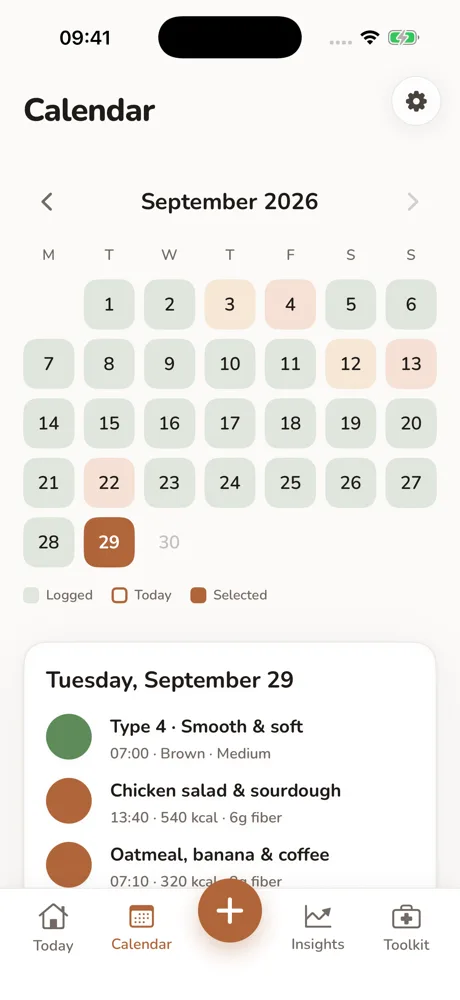
Why keep a food and symptom diary
Memory is good at the dramatic meal and bad at the quiet pattern. A diary fixes that. The NHS advice for IBS includes keeping a diary of what you eat and any symptoms you get, so you can try to avoid things that trigger them. For suspected food intolerance, the NHS says a doctor may ask you to keep a food and symptoms diary to help work out what may be triggering symptoms.
The NHS also warns that some home tests that claim to identify food intolerances are not recommended, because there is limited evidence they are accurate. A careful diary, reviewed with a professional, is the more reliable route.
What to write down
| Record | Example | Why it helps |
|---|---|---|
| Meals and snacks, with the time | 8:00 oat porridge with milk, coffee | Reactions can come hours later, so times matter. |
| Drinks | 2 coffees, 1 glass of wine, 5 glasses of water | Fluids, caffeine and alcohol can all play a part. |
| Symptoms, with time and strength (0 to 10) | 15:00 bloating 6/10 | A number makes good and bad days comparable. |
| Bowel movements | Type 6 at 16:30 | The Bristol type shows the effect on your gut. |
| Context | Slept 5 hours, deadline day, period day 2 | Stress, sleep and cycle can change symptoms on their own. |
How long to keep it
Two to four weeks is a practical length for most people: long enough to cover normal weeks and odd ones, short enough to stick with. Patterns that only show up now and then may need longer. If a clinician asked you to keep one, follow their instructions.
Do not cut foods out on a hunch
A diary is for noticing, not for strict diets. The Monash University FODMAP team says its low FODMAP diet is intended for people with medically diagnosed IBS, and that a doctor should assess your symptoms and rule out other conditions before you start.
How to read your diary
- Look for repeats, not one-offs. A symptom that follows the same food on three or more separate days is worth a closer look.
- Check the timing. Note how long after eating each symptom starts.
- Check the context. A rough night or a stressful week can explain a bad day as well as any food.
- Take it to your appointment. A GP or dietitian can do much more with a few weeks of notes than with a description from memory.
Free printable diary
Prefer paper? Our free printable has a Bristol chart on page one and a two week log on page two, with columns for meals, drinks, symptoms, Bristol type and notes. Print it, keep it in the kitchen or bathroom, and bring it to your appointment.
Download the free printable (PDF) PDF, 2 pages, 83 KB. US Letter, prints fine on A4.
Common questions
What should I write in a food and symptom diary?
Meals and snacks with times, drinks, symptoms with a time and a 0 to 10 score, bowel movements with a Bristol type, and context such as sleep, stress or your cycle. The table above shows an example of each.
How long should I keep a food diary for IBS?
Two to four weeks is a practical length for most people. If a clinician asked you to keep one, follow their instructions. The NHS suggests a diary of what you eat and any symptoms as part of managing IBS.
Do food intolerance tests work?
The NHS says some home tests that claim to identify food intolerances are not recommended, because there is limited evidence they give accurate results. A food and symptoms diary reviewed with a professional is the route it describes.
Should I try a low FODMAP diet?
Monash University, which developed the diet, says it is intended for people with medically diagnosed IBS, after a doctor has assessed your symptoms and ruled out other conditions.
Is there a printable food and symptom diary?
Yes. Our free printable includes a two week diary with columns for meals, drinks, symptoms, Bristol type and notes.
When to talk to a doctor
Contact a doctor promptly if you notice any of these. Get urgent help if you also feel faint, dizzy or very unwell.
- Blood in your stool, or black, tarry stool
- Pale, clay colored or white stool
- Losing weight without trying
- Severe or ongoing tummy pain
- A change in your usual pattern that lasts more than a few weeks
- Diarrhea with signs of dehydration, such as dizziness or very little urine
Sources
- Irritable bowel syndrome: diet, lifestyle and medicines, NHS
- Food intolerance, NHS
- About FODMAPs and IBS, Monash University
- Bristol Stool Chart, Continence Health Australia
How this page was made. Written by the Log For Your Log team with AI drafting help, based on our in-app Learn library, then checked line by line against the sources below. Read how we write Learn.