Diarrhea when traveling: food and water safety, fluids and when to get care
Travelers' diarrhea is the most predictable travel-related illness, according to the CDC. Most cases are short and settle without treatment, but fluids matter and some signs need a doctor. Here is how to lower your risk, what to do if it starts, and when to get help.
Updated November 3, 2026 · 7 min read · By the Log For Your Log team · 7 sources
 Know your numbers if you get sick on a trip. Free on iPhone.Get the app
General information, not medical advice. This page can help you notice patterns and talk with a clinician. It cannot tell you what is causing a symptom.
What travelers' diarrhea is
Mayo Clinic describes travelers' diarrhea as a digestive tract disorder that commonly causes loose stools and stomach cramps, caused by eating contaminated food or drinking contaminated water. The most common symptoms are suddenly passing three or more looser, watery stools a day, an urgent need to go, stomach cramps, nausea, vomiting and fever. For most people it is unpleasant rather than serious.
The CDC Yellow Book calls it the most predictable travel-related illness, with attack rates of 30% to 70% of travelers during a 2-week period, depending on the destination and season. Bacteria cause most cases, and viruses and parasites cause the rest. Mayo Clinic adds that you can have more than one episode on the same trip.
Where the risk is higher, and how quickly it starts
NIDDK says travelers' diarrhea can happen anywhere, but it is more likely in areas where sanitation and access to clean water are limited. Mayo Clinic lists Central and South America, Mexico, Africa, and South and Southeast Asia as high-risk destinations, and says the risk is generally low in places such as Northern and Western Europe, Japan, Canada, Australia, New Zealand and the United States. The CDC notes that poor hygiene in local restaurants and gaps in sanitation are likely the biggest contributors.
Timing gives some clues. The CDC says illness from bacteria and viruses usually starts between 6 and 96 hours after exposure, while parasites take longer, often 1 to 2 weeks. Mayo Clinic says it can start suddenly during your trip or shortly after you get home.
| Cause | Usual length |
|---|---|
| Viruses | Generally 2 to 3 days |
| Bacteria | Usually 3 to 7 days |
| Parasites | Can persist for weeks to months |
Food and water safety
The traditional rule is boil it, cook it, peel it or forget it. Both the CDC and Mayo Clinic point out that people who follow it can still get sick, partly because restaurant hygiene is out of your control. Careful choices still lower the risk. From Mayo Clinic, MedlinePlus and NIDDK, in high-risk areas:
- Drinks: stick to bottled drinks in sealed containers that you open yourself, and wipe the can or bottle first. Steaming hot coffee or tea is a safer choice. Alcohol in a drink will not make contaminated water or ice safe.
- Ice and tap water: avoid ice made from tap water and juices mixed with tap water. Use bottled water to brush your teeth, and keep your mouth closed in the shower. If you need to use local water, Mayo Clinic says to boil it for three minutes and let it cool in a clean covered container.
- Food: eat food that is well cooked and served hot. Avoid raw or undercooked meat, fish and shellfish, unpasteurized milk and dairy, and moist food left at room temperature, such as sauces and buffet dishes. MedlinePlus also advises against hot food that has been sitting around for a long time.
- Fruit and vegetables: choose fruit you peel yourself, such as bananas and oranges, and skip salads, raw leafy greens and fruit you cannot peel, like grapes and berries.
- Street food: both Mayo Clinic and MedlinePlus advise against buying food from street vendors.
- Hands: wash often, and always before eating. The CDC says a small hand sanitizer with at least 60% alcohol makes it easier to clean your hands when soap and water are not available.
If it starts: fluids first
The CDC says replacing lost fluid is key, and helps you feel better more quickly, although severe dehydration is unusual in otherwise healthy adults unless vomiting goes on for a long time. Practical steps from health services:
- Drink steadily. The NHS says the most important thing is to have lots of fluids, taking small sips if you feel sick. MedlinePlus suggests at least 1 cup (240 milliliters) of liquid every time you have a loose bowel movement.
- Use safe drinks only. The CDC reminds travelers to use only drinks that are sealed, treated with chlorine, boiled or otherwise known to be purified.
- Consider oral rehydration solution. For heavy fluid loss, the CDC says oral rehydration solution made from packaged salts is best, and that it is widely available in stores and pharmacies in most low- and middle-income countries. For mild cases, any preferred drink, including sports drinks, can do, but very sweet drinks such as soda can make diarrhea worse in large amounts.
- Eat when you feel able. NIDDK says that when your appetite returns you can usually eat your normal diet, but to avoid alcohol, caffeine, very sugary or fatty foods and foods with sugar alcohols while it lasts. MedlinePlus suggests small meals every few hours and some salty foods such as crackers and soup.
- Ask before taking anything. A pharmacist or doctor can tell you whether any medicine is suitable for you. Mayo Clinic suggests talking to a doctor before a trip to a high-risk area about having approved medicines with you.
Count your loose stools
Several warning signs depend on numbers: how many loose stools a day and how many days it has lasted. A quick note each time makes those questions easy to answer.
When to get medical care
Mayo Clinic says adults should see a doctor if diarrhea lasts beyond two days, they become dehydrated, they have severe stomach or rectal pain, they have bloody or black stools, or they have a fever above 102 F (39 C). Abroad, it says a local embassy or consulate may be able to help you find a well-regarded doctor who speaks your language.
NIDDK adds six or more loose stools a day, frequent vomiting, a change in mental state, and stools that contain pus. It lists the signs of dehydration as extreme thirst or dry mouth, urinating less than usual, feeling tired, dizzy or lightheaded, dark-colored urine, and sunken eyes or cheeks. The NHS says to get urgent advice if you keep being sick and cannot keep fluid down, or still have signs of dehydration after using rehydration sachets.
This guide is for adults. Mayo Clinic warns that travelers' diarrhea can cause severe dehydration in children in a short time, so call a doctor early for a child.
After you get home
MedlinePlus lists having recently traveled to a foreign country and developed diarrhea among the reasons to contact your provider, so mention your trip if symptoms start after you return. The CDC notes that parasites are the more likely cause when diarrhea lasts more than 2 weeks, and that a short bout can sometimes leave longer-lasting gut symptoms, which doctors call post-infectious irritable bowel syndrome. Both are worth raising with a doctor rather than waiting out.
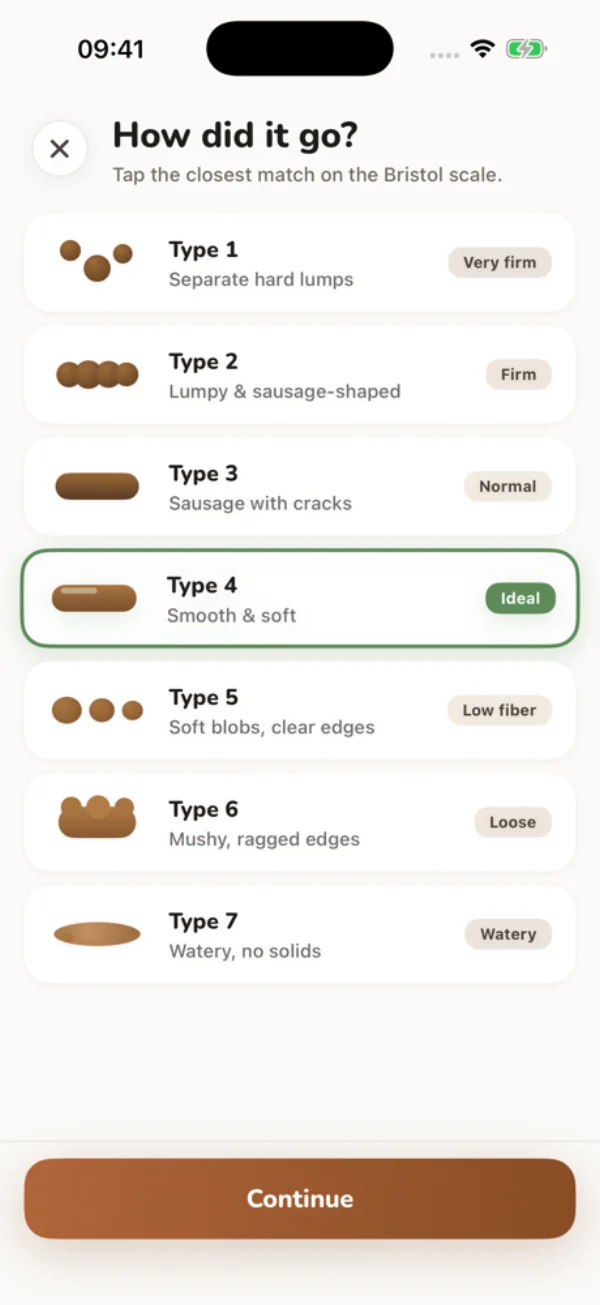
A simple record helps that conversation. For example: Day 3 of trip, 7 loose stools, type 7, cramps, no blood. Day 5, 2 loose stools, type 6. Day 7, type 5. Our type 7 guide covers watery stools in more detail.
Common questions
How long does travelers' diarrhea last?
Mayo Clinic says most people improve within 1 to 2 days without treatment and recover completely within a week. The CDC says untreated bacterial diarrhea usually lasts 3 to 7 days and viral diarrhea 2 to 3 days.
How long after exposure does travelers' diarrhea start?
The CDC says illness from bacteria and viruses usually starts 6 to 96 hours after exposure. Parasites usually take longer, around 1 to 2 weeks, so they rarely cause symptoms in the first few days of a trip.
What should I eat and drink with travelers' diarrhea?
Fluids come first. MedlinePlus suggests at least 1 cup of liquid for every loose stool, small meals every few hours and some salty foods. NIDDK suggests avoiding alcohol, caffeine and fatty or very sugary foods until it settles.
How can I prevent travelers' diarrhea?
Choose sealed drinks, avoid tap water and ice, eat food that is well cooked and served hot, peel your own fruit and wash your hands before eating, as Mayo Clinic advises. The CDC says these steps reduce the risk but never fully remove it.
Is travelers' diarrhea contagious?
The germs that cause it can spread. The NHS says diarrhoea and vomiting can spread easily, and suggests washing your hands with soap and water often, not sharing towels, and not preparing food for others if possible.
When should I see a doctor for travelers' diarrhea?
Mayo Clinic says adults should see a doctor if it lasts beyond two days, they become dehydrated, they have severe stomach or rectal pain, bloody or black stools, or a fever above 102 F (39 C).
When to talk to a doctor
Contact a doctor promptly if you notice any of these. Get urgent help if you also feel faint, dizzy or very unwell.
- Blood in your stool, or black, tarry stool
- Pale, clay colored or white stool
- Losing weight without trying
- Severe or ongoing tummy pain
- A change in your usual pattern that lasts more than a few weeks
- Diarrhea with signs of dehydration, such as dizziness or very little urine
Sources
- Travelers' diarrhea, CDC Yellow Book
- Traveler's diarrhea: symptoms and causes, Mayo Clinic
- Traveler's diarrhea diet, MedlinePlus
- Diarrhea, MedlinePlus
- Diarrhoea and vomiting, NHS
- Symptoms and causes of diarrhea, NIDDK (NIH)
- Eating, diet and nutrition for diarrhea, NIDDK (NIH)
How this page was made. Written by the Log For Your Log team with AI drafting help, based on our in-app Learn library, then checked line by line against the sources below. Read how we write Learn.