Bristol type 6 stool: mushy and loose
Fluffy, mushy pieces with ragged edges. One type 6 day is common. Here is what usually explains it, and when a run of them is worth a call.
Updated October 21, 2026 · 3 min read · By the Log For Your Log team · 7 sources
 Log a type 6 day and what came before it. Free on iPhone.Get the app

General information, not medical advice. This page can help you notice patterns and talk with a clinician. It cannot tell you what is causing a symptom.
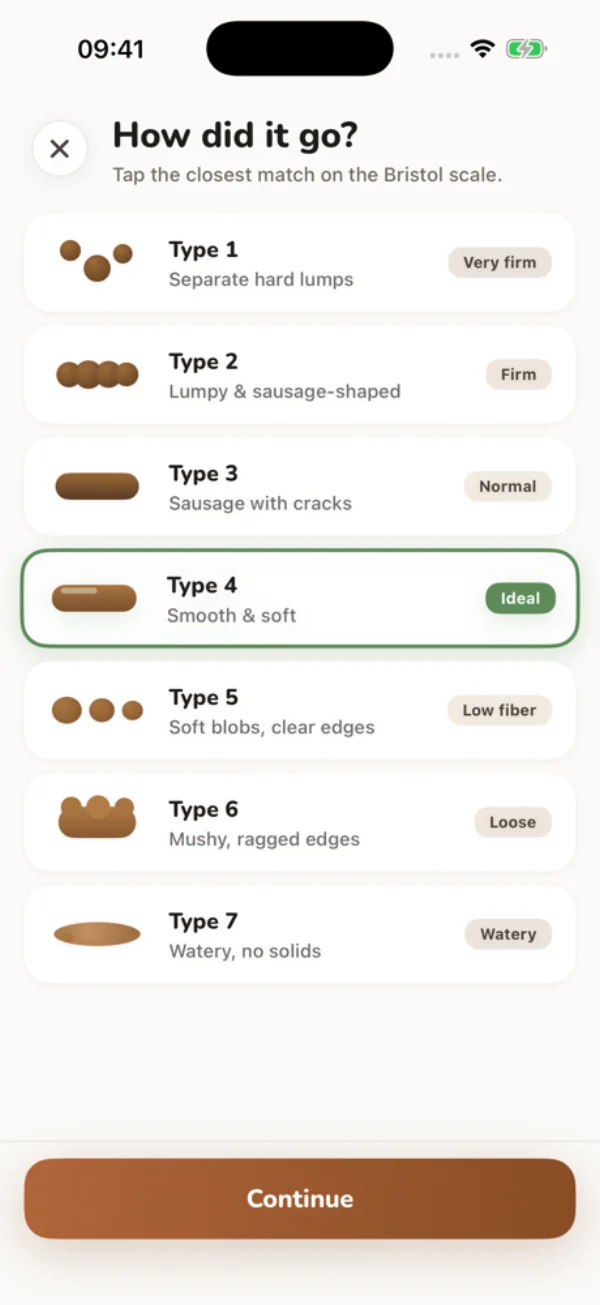
What type 6 looks like
On the Bristol stool chart, type 6 is fluffy, mushy pieces with ragged edges. It is one step firmer than type 7 (fully watery) and one step looser than type 5 (soft blobs with clear edges).
Continence Health Australia groups types 5 to 7 together as signs of diarrhea or urgency. In the original 1997 study the scale came from, looser forms went with faster transit, meaning food moved through the gut more quickly (Lewis and Heaton).
Is type 6 diarrhea?
It can be. NIDDK defines diarrhea as loose, watery stools three or more times a day, or more often than is normal for you. So a single type 6 is usually just a loose day, while several a day is diarrhea by that definition.
NIDDK also sorts diarrhea by how long it lasts. Acute diarrhea is common, typically lasts less than a week and goes away on its own. Persistent diarrhea lasts longer than 2 weeks, and chronic diarrhea at least 4 weeks.
Common everyday reasons
Health services list many causes of diarrhea, from infections to food and medicines. Some everyday ones people often notice in a log:
- A stomach bug. The NHS says diarrhea usually stops within 5 to 7 days in adults.
- A food your gut does not handle well. Keeping a food and symptom diary is how the NHS suggests working out triggers for food intolerance.
- A medicine. NIDDK lists antibiotics and antacids containing magnesium among medicines that may cause acute diarrhea, and notes that sugar alcohols such as sorbitol in some liquid medicines can too.
- A stressful stretch, travel or a big change in routine, which many people notice shifts their pattern for a few days.
Looking after yourself on a type 6 day
- Fluids first. The NHS says the most important thing is to drink lots of fluids to avoid dehydration, taking small sips if you feel sick.
- Eat when you feel like it. NIDDK says that with acute diarrhea, most people can go back to their normal diet once they feel like eating.
- Ask a pharmacist about medicines or rehydration sachets, especially if you are older or have other health conditions (NHS).
- Log it. Note the type, the time and anything unusual you ate or did. If it keeps happening, that record is what a doctor will want.
When type 6 needs a doctor
NIDDK says adults should talk with a doctor right away for diarrhea lasting more than 2 days, a high fever, six or more loose stools a day, frequent vomiting, severe pain in the abdomen or rectum, black or bloody stools, or signs of dehydration. The NHS suggests getting advice for diarrhea lasting more than 7 days. A lasting change to looser stools than usual is also on the NHS list of bowel changes to get checked. See our when to see a doctor guide for the full list.
Common questions
What does a Bristol type 6 stool mean?
It means stool is on the loose side. Continence Health Australia groups types 5 to 7 as signs of diarrhea or urgency, and the original study linked looser types with faster transit (Lewis and Heaton).
Is type 6 poop diarrhea?
It can be. NIDDK defines diarrhea as loose, watery stools three or more times a day, or more often than is normal for you.
How long does mushy poop usually last?
NIDDK says acute diarrhea typically lasts less than a week and goes away on its own. The NHS says diarrhea usually stops within 5 to 7 days in adults.
What should I eat with loose stools?
NIDDK says that with acute diarrhea, most people can go back to their normal diet once they feel like eating. Fluids come first to avoid dehydration (NHS).
Can stress or a new medicine cause type 6?
NIDDK lists medicines such as antibiotics and magnesium antacids among causes of acute diarrhea. Many people also notice stress and routine changes shift their pattern for a few days.
When to talk to a doctor
Contact a doctor promptly if you notice any of these. Get urgent help if you also feel faint, dizzy or very unwell.
- Blood in your stool, or black, tarry stool
- Pale, clay colored or white stool
- Losing weight without trying
- Severe or ongoing tummy pain
- A change in your usual pattern that lasts more than a few weeks
- Diarrhea with signs of dehydration, such as dizziness or very little urine
Sources
- Bristol Stool Chart, Continence Health Australia
- Stool form scale as a useful guide to intestinal transit time, Lewis SJ, Heaton KW. Scandinavian Journal of Gastroenterology, 1997
- Definition and facts for diarrhea, NIDDK (NIH)
- Symptoms and causes of diarrhea, NIDDK (NIH)
- Eating, diet and nutrition for diarrhea, NIDDK (NIH)
- Diarrhoea and vomiting, NHS
- Food intolerance, NHS
How this page was made. Written by the Log For Your Log team with AI drafting help, based on our in-app Learn library, then checked line by line against the sources below. Read how we write Learn.