Green poop: why it happens and when to ask a doctor
Looking down and seeing green can be a jolt. Most of the time it comes back to something you ate or drank, and it fades within a day or two. Here is what usually causes green poop, how to work out your own reason, and the signs that mean it is time to talk to a doctor.
Updated October 31, 2026 · 7 min read · By the Log For Your Log team · 5 sources
 Wondering if it was the spinach? Free on iPhone.Get the app
General information, not medical advice. This page can help you notice patterns and talk with a clinician. It cannot tell you what is causing a symptom.
Is green poop normal?
Brown is the usual color for adult poop, but the shade can vary from day to day. Cleveland Clinic says a few off-color poops do not mean you are unhealthy, and that most of the time an unusual color points to something you ate. Once that food is out of your system, your poop should go back to brown.
Stool gets its brownish color from bile, a greenish-brown fluid that helps with digestion. A Cleveland Clinic gastroenterologist explains that bile levels in your gut naturally go up and down, which alone can shift the color slightly from day to day (Cleveland Clinic). Add a big salad or a bright green cupcake, and green becomes much more likely.
The same gastroenterologist offers a useful rule of thumb: if you feel perfectly fine and do not have diarrhea, a different colored bowel movement is most likely linked to something you ate (Cleveland Clinic).
The most common causes of green poop
These are the reasons Cleveland Clinic gives, roughly from most to least common. Most people find their answer in the first two rows.
| Cause | Examples | What to know |
|---|---|---|
| Green foods | Spinach, kale, broccoli, avocados, green apples, honeydew melon, pistachios, matcha, hemp seeds, herbs like basil, cilantro and parsley | The chlorophyll that makes vegetables green can do the same to your poop. |
| Blue or purple foods | Blueberries and other blue or purple fruits and vegetables | Pigments in blueberries can tint poop bluish, very dark or green. |
| Food dye | Green frosting or candy, and also blue or purple dyes | Color should return to brown once the dye has left your system. |
| Some medicines and supplements | Antibiotics, iron supplements | Antibiotics can change your gut flora. Iron can turn poop dark green or even blackish. |
| Infections | Bacteria such as Salmonella or E. coli, norovirus, the parasite Giardia | Usually comes with diarrhea rather than on its own. |
| Fast transit and gut conditions | Food passing through your intestines too fast, IBS, ulcerative colitis, Crohn's disease, gallbladder removal | Less common. Cleveland Clinic says these causes are possible but not the norm. |
Leafy greens and food coloring
Food is the most likely explanation, especially if you eat a lot of broccoli, kale or spinach. Cleveland Clinic explains that the chlorophyll that gives those vegetables their color can do the same to your poop. Green smoothies, a large serving of pesto or a matcha habit can all show up later on.
Food dye is the other big one. Bright green frosting, sweets or drinks can tint poop green, and blue or purple dyes may also turn it greenish as they mix with your digestive juices. Cleveland Clinic notes that dye keeps tinting whatever it touches even after you have eaten it.
A food-related tint should disappear within a day or two once the source has passed through your system, says Dr. Christine Lee, a gastroenterologist at Cleveland Clinic. In a separate article she says the process could take a few days (Cleveland Clinic).
Fast transit, medicines and infections
Not every green poop is about food. Cleveland Clinic's stool color guide lists food passing through your intestines too fast as one of the health reasons for green stool, alongside bacterial infections and irritable bowel syndrome. That fits Dr. Lee's rule of thumb above: diarrhea is the clue that something other than food may be involved.
Cleveland Clinic's green poop article adds a few more reasons:
- Antibiotics. They can change your gut flora, which can add a greenish tint. Some medicines can also upset your stomach and cause diarrhea that looks a bit green.
- Iron supplements. These can turn poop dark green or even blackish (Cleveland Clinic). If you take iron and are unsure whether your poop is green or black, ask a pharmacist or doctor.
- Infections. Bacterial infections such as Salmonella or E. coli, a virus such as norovirus, or the parasite Giardia can all be behind greenish stool. Cleveland Clinic describes Giardia as causing a rapid transit gush of unabsorbed bile in diarrhea.
- Gut conditions. IBS, ulcerative colitis and Crohn's disease can cause green poop in some cases. Having your gallbladder removed may also send more bile into your digestive tract for a while, which can lead to greenish diarrhea.
Keep it in proportion
Dr. Lee puts it plainly: all of these causes are possible, but they are not the norm. A green poop on a day you feel well is very rarely about anything other than diet.
How to work out your own reason
Cleveland Clinic suggests thinking back over what you have recently eaten, because you will usually find a simple reason. A short checklist helps:
- The last 24 to 48 hours of food. Leafy greens, green smoothies, pesto, herbs, pistachios, blueberries, matcha or anything brightly colored.
- Drinks and sweets. Sports drinks, sodas, frosting and candy with green, blue or purple dye.
- Medicines and supplements. A new antibiotic course or iron tablets. Do not stop anything you were prescribed without talking to a health professional first.
- How you feel. Diarrhea, cramps, fever or vomiting point more toward an infection or another cause than toward food.
- How long it lasts. If you skip the suspect food for a couple of days and your poop goes back to brown, you have your answer.
What a useful log entry looks like
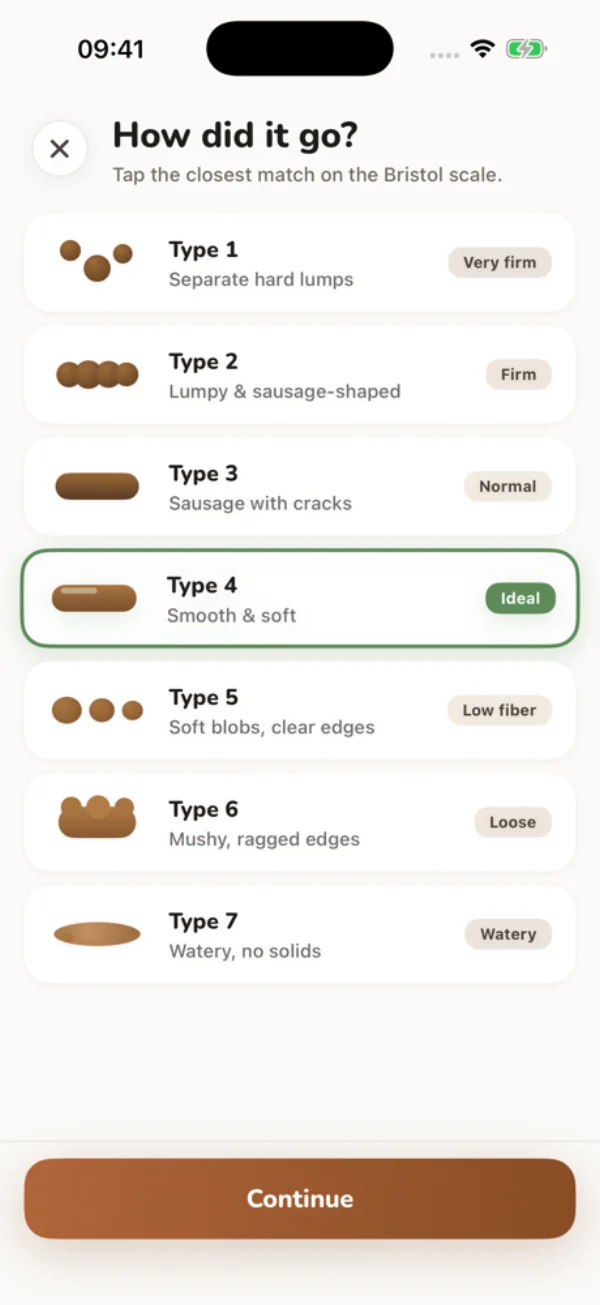
A color on its own does not tell you much. A color next to what you ate the day before usually does. For example:
- Tuesday 7:40 am: type 4, green. Note: big spinach and kale salad at dinner. Feel fine.
- Wednesday 8:05 am: type 4, brown. Note: no greens yesterday.
- Saturday 10:15 am: type 6, green. Note: second loose one today, stomach cramps, started after takeout last night.
When to see a doctor about green poop
Cleveland Clinic says oddly colored poop might mean something needs attention, particularly if it lingers or comes with abdominal pain, weight loss, bleeding, fever or vomiting. It adds that pale poop or blood-tinged stool is of particular concern, and to call a doctor if symptoms do not improve or resolve completely.
Its stool color guide says to contact a healthcare provider if your poop does not go back to brown within a few days (Cleveland Clinic). For pale or clay-colored stools, MedlinePlus advises contacting your provider if your stools are not the normal brown color for several days.
If green poop comes with diarrhea, NIDDK says adults should talk with a doctor right away if the diarrhea lasts more than 2 days, or comes with a high fever, six or more loose stools a day, frequent vomiting, severe pain in the abdomen or rectum, stools that are black and tarry or contain red blood or pus, or signs of dehydration such as extreme thirst, urinating less than usual, or feeling dizzy or lightheaded. Our when to see a doctor guide brings these signs together in one place.
Common questions
What does green poop mean?
Most often, that you ate something green or dyed. Cleveland Clinic lists green leafy vegetables like kale or spinach and green food coloring as the food causes, and bacterial infections, IBS and food passing through your intestines too fast as health causes.
Is green poop normal in adults?
An occasional green poop is common. Cleveland Clinic says a surprise color on its own usually is not a reason to be alarmed, and that if you feel fine and do not have diarrhea, it is most likely linked to something you ate.
How long does green poop last after eating greens?
A Cleveland Clinic gastroenterologist says a food-related tint should disappear within a day or two once the source has passed through your system, and that the process could take a few days. If it does not go back to brown within a few days, Cleveland Clinic suggests contacting a healthcare provider.
Can iron supplements cause green poop?
Yes. Cleveland Clinic says iron supplements can turn poop dark green or even blackish. If you are not sure whether it is dark green or black, mention it to a pharmacist or doctor.
Should I worry about green diarrhea?
Green diarrhea can come from infections such as Salmonella, E. coli, norovirus or Giardia, or from some medicines (Cleveland Clinic). Drink plenty of fluids and talk with a doctor right away if it lasts more than 2 days or comes with high fever, blood or signs of dehydration (NIDDK).
When to talk to a doctor
Contact a doctor promptly if you notice any of these. Get urgent help if you also feel faint, dizzy or very unwell.
- Blood in your stool, or black, tarry stool
- Pale, clay colored or white stool
- Losing weight without trying
- Severe or ongoing tummy pain
- A change in your usual pattern that lasts more than a few weeks
- Diarrhea with signs of dehydration, such as dizziness or very little urine
Sources
- Why is your poop green?, Cleveland Clinic
- What does my stool (poop) color mean?, Cleveland Clinic
- Can food change the color of your poop?, Cleveland Clinic
- Stools: pale or clay-colored, MedlinePlus
- Symptoms and causes of diarrhea, NIDDK (NIH)
How this page was made. Written by the Log For Your Log team with AI drafting help, then checked line by line against the sources below. Read how we write Learn.