Poop colors and what they usually mean
Most shades of brown are fine, and food explains a lot of surprises. A few colors are worth a call to a doctor. This guide is for adults.
Updated October 22, 2026 · 4 min read · By the Log For Your Log team · 5 sources
 Log the color and the meal together. Free on iPhone.Get the app

General information, not medical advice. This page can help you notice patterns and talk with a clinician. It cannot tell you what is causing a symptom.
Why poop is usually brown
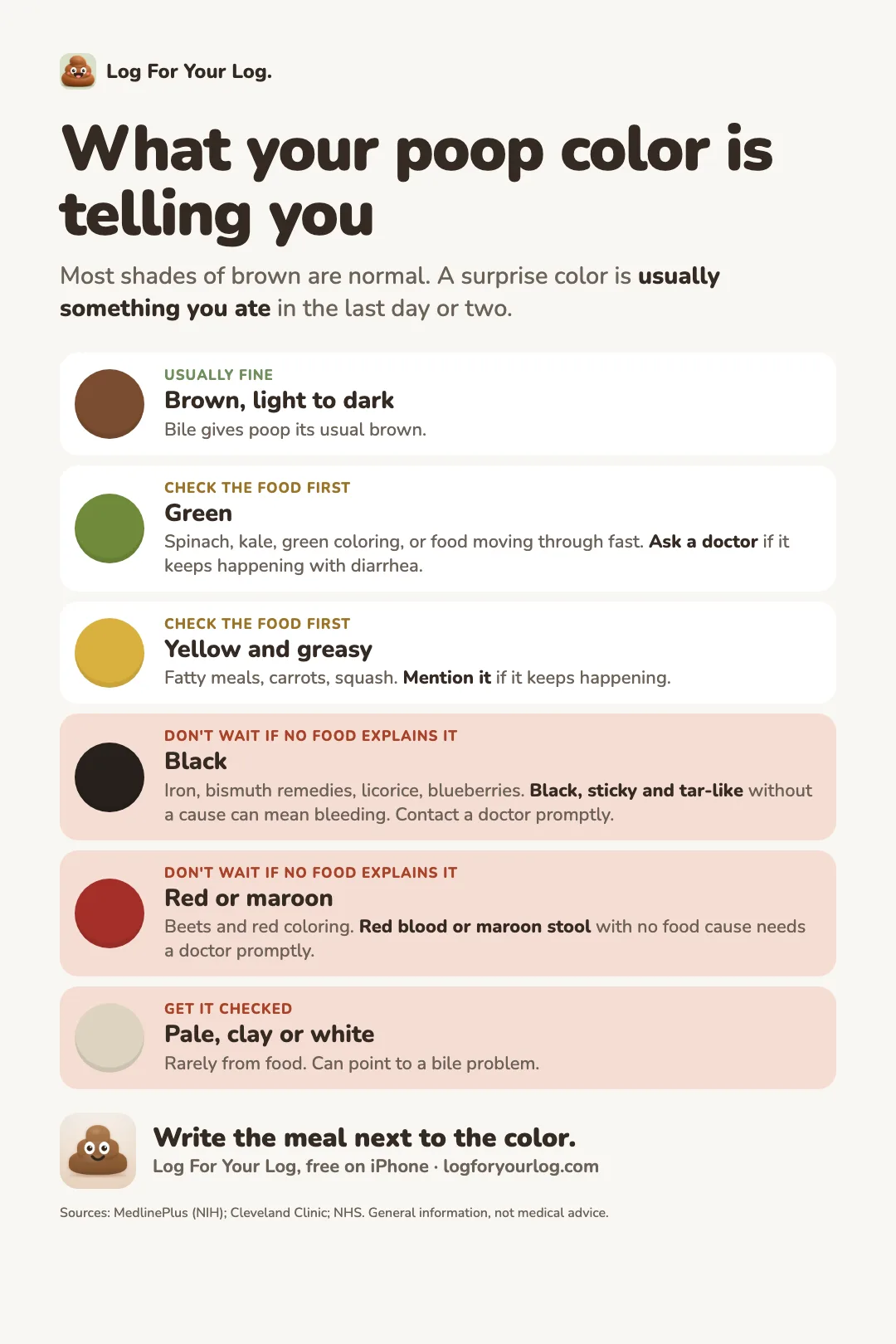
Poop is usually some shade of brown. MedlinePlus explains that the liver releases bile salts into the stool, which gives it its normal brown color. Light brown, dark brown and everything in between are usually fine.
When you see something unexpected, think back a day or two first. As Cleveland Clinic puts it, most of the time the color of your poop points to something you ate, though not always.
Color by color
| Color | Common everyday causes | When to get it checked |
|---|---|---|
| Green | Leafy greens like spinach or kale, green food coloring, or food moving through quickly (Cleveland Clinic). | If it keeps happening with ongoing diarrhea. |
| Orange | Foods high in beta carotene such as carrots, sweet potatoes, squash or pumpkin, or orange food coloring (Cleveland Clinic). | If it does not go back to brown within a few days, check with a healthcare provider. |
| Yellow, greasy | Can follow lots of fatty foods, or foods high in beta carotene such as carrots and squash (Cleveland Clinic). | If it keeps happening, mention it to a doctor. |
| Black | Iron supplements, bismuth stomach remedies, black licorice, blueberries or activated charcoal (MedlinePlus). | Black, sticky, tar-like stool without one of these causes can mean bleeding higher up in the gut. Contact a doctor promptly. |
| Red | Beets and foods or drinks with red coloring (MedlinePlus). | Red blood, maroon stool or red with no food explanation. Contact a doctor promptly. |
| Pale, clay or white | Rarely food related. | MedlinePlus notes pale or clay colored stool may be due to problems with the bile system. Get it checked. |
Check the food first, then watch
A red day after a beet salad, or a dark day after starting iron, has an obvious cause and usually clears within a day or two of stopping that food. A color with no obvious cause, or one that keeps coming back, is a different story.
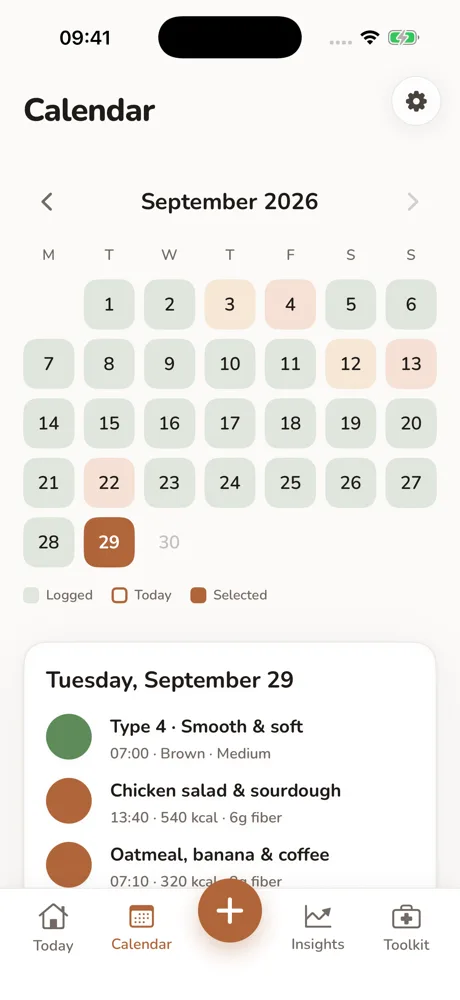
Write the meal next to the color
A one line note like "beet salad at lunch" is the difference between a worry and an explanation, for you and for a doctor.
A quick way to check a surprise color
- Think back 24 to 48 hours. Beets, leafy greens, food coloring, blueberries and iron supplements are common culprits (Cleveland Clinic, MedlinePlus).
- Check new medicines and supplements. Iron and bismuth stomach remedies can turn stool dark or black (MedlinePlus).
- Look at the texture too. Green with loose stools can come from food moving through quickly (Cleveland Clinic). Black and sticky is different from dark brown and formed.
- Watch the next one or two. A food tint usually clears once that food has passed. A color that keeps coming back without an obvious reason is worth asking about.
- If in doubt, ask. A doctor or pharmacist can tell you whether a color needs a test. MedlinePlus notes that a provider can test the stool with a chemical to check for blood.
Colors not to wait on
Some colors can be a sign of bleeding or of a problem with bile flow. MedlinePlus lists black, tarry stool as a possible sign of bleeding in the upper digestive tract, and the NHS advises seeing a GP if you have had blood in your poo for three weeks, and getting emergency help if there is a lot of blood or it does not stop.
If you are unsure whether a color is food or something else, it is reasonable to ask. Clinicians would much rather check a beet day than miss a bleed.
Common questions
Why is my poop green?
Often from green leafy vegetables like spinach or kale, or green food coloring. Cleveland Clinic also lists food passing through the intestines quickly, for example with diarrhea. Green that keeps coming back with ongoing diarrhea is worth asking a doctor about.
Why is my poop black?
MedlinePlus lists iron pills, bismuth medicines, black licorice, blueberries and activated charcoal as causes of black stools. Black, tarry stool without one of those causes can be a sign of bleeding higher up in the digestive tract, so contact a doctor promptly.
Can beets turn poop red?
Yes. MedlinePlus says beets and foods with red coloring can sometimes make stools appear reddish. Red you cannot link to food, or visible blood, needs a doctor.
What does yellow poop mean?
Cleveland Clinic lists eating lots of fatty foods or foods high in beta carotene, such as carrots and squash, among food causes. If yellow, greasy stools keep happening, mention it to a doctor.
Is pale or white poop serious?
MedlinePlus says pale or clay colored stools may be due to problems with the bile system, since bile salts give stool its brown color. It is not usually from food, so get it checked.
When to talk to a doctor
Contact a doctor promptly if you notice any of these. Get urgent help if you also feel faint, dizzy or very unwell.
- Red or maroon stool you cannot link to something you ate
- Blood in your stool, or black, tarry stool
- Pale, clay colored or white stool
- Losing weight without trying
- Severe or ongoing tummy pain
- A change in your usual pattern that lasts more than a few weeks
- Diarrhea with signs of dehydration, such as dizziness or very little urine
Sources
- Stools: black or tarry, MedlinePlus (NIH)
- Stools: pale or clay colored, MedlinePlus (NIH)
- Stool (poop) color: what it means, Cleveland Clinic
- Gastrointestinal bleeding, NIDDK (NIH)
- Bleeding from the bottom (rectal bleeding), NHS
How this page was made. Written by the Log For Your Log team with AI drafting help, based on our in-app Learn library, then checked line by line against the sources below. Read how we write Learn.