Foods that help you poop: fiber, fruit and fluids that keep things moving
If you are feeling backed up, what you eat and drink is usually the first thing to look at. Here is what NIDDK, the NHS, MedlinePlus and Mayo Clinic say about the foods and fluids that help you poop, how much fiber to aim for, and how to add it without a bloated week.
Updated October 28, 2026 · 7 min read · By the Log For Your Log team · 6 sources
 See how your meals and water line up with your poops. Free on iPhone.Get the app
General information, not medical advice. This page can help you notice patterns and talk with a clinician. It cannot tell you what is causing a symptom.
Why fiber helps you poop
Fiber is the part of plant foods your body cannot digest or absorb. Mayo Clinic explains that it passes through your stomach, small intestine and colon fairly intact, and that it increases the weight and size of stool and softens it. Bulky stool is easier to pass, which lowers the chance of constipation.
Mayo Clinic describes two types. Soluble fiber dissolves in water and forms a gel, and is found in oats, peas, beans, apples, bananas, citrus fruits, carrots and barley. Insoluble fiber does not dissolve, supports the movement of material through your gut and adds bulk to stool, and is found in whole-wheat flour, wheat bran, nuts, beans and vegetables such as cauliflower, green beans and potatoes. Most high fiber foods contain both.
NIDDK sums up the plan for constipation in two lines: eat enough fiber, and drink plenty of liquids to help the fiber work better.
How much fiber do you need?
Health bodies give slightly different targets, but they land in the same place. Most adults could do with more.
| Source | Daily fiber for adults |
|---|---|
| NIDDK (citing the Dietary Guidelines for Americans) | 22 to 34 grams, depending on age and sex |
| Mayo Clinic (citing the National Academy of Medicine) | Women: 25 grams at 50 or younger, 21 grams over 50. Men: 38 grams at 50 or younger, 30 grams over 50 |
| NHS (UK government guidelines) | 30 grams, while most adults eat an average of about 20 grams |
Fiber-rich foods to choose
NIDDK lists these as good sources of fiber:
- Whole grains. Whole wheat bread and pasta, oatmeal and bran flake cereals.
- Legumes. Lentils, black beans, kidney beans, soybeans and chickpeas.
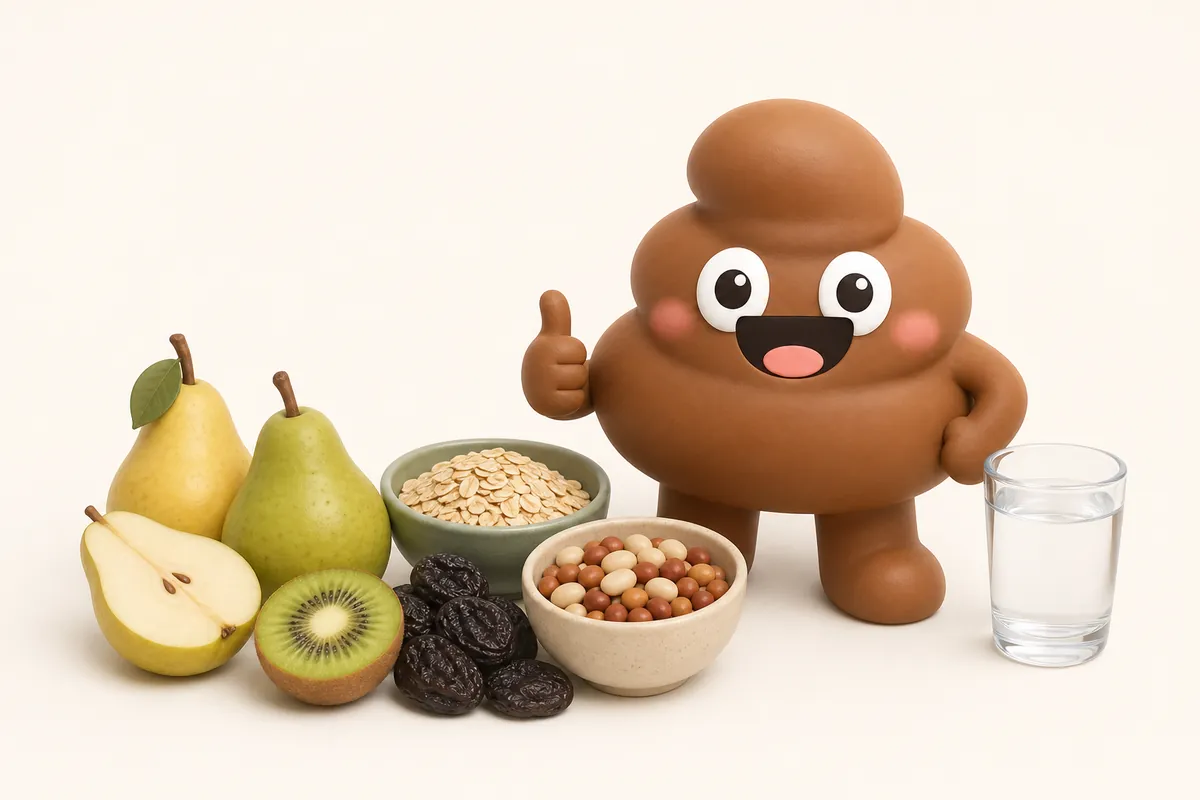
- Fruits. Berries, apples with the skin on, oranges and pears.
- Vegetables. Carrots, broccoli, green peas and collard greens.
- Nuts. Almonds, peanuts and pecans.
Easy ways to fit more in
The NHS suggests a higher fiber breakfast cereal or porridge, wholemeal or granary bread, wholewheat pasta, bulgur wheat or brown rice, potatoes with their skins on, and adding beans, lentils or chickpeas to stews, curries and salads. For snacks it suggests fresh fruit, vegetable sticks, oatcakes, rye crackers and unsalted nuts or seeds.
The NHS constipation page also suggests adding some wheat bran, oats or linseed to your diet.
Fruits that help, including prunes
Prunes have a reputation for a reason. MedlinePlus says most fruits will help ease constipation, and names berries, grapes, peaches, apricots, plums, raisins, rhubarb and prunes as some of the fruits that may help. It suggests not peeling fruits that have edible skins, because a lot of the fiber is in the skin.
The NHS points to fruits that contain the sweetener sorbitol, such as apples, apricots, grapes and raisins, raspberries and strawberries, as part of a healthy balanced diet when you are constipated.
Dried fruit counts too. The NHS fibre page suggests fresh or dried fruit for dessert, but notes that dried fruit is sticky and can increase the risk of tooth decay, so it is better eaten with a meal than as a snack between meals.
Do not forget fluids
Fiber needs water to do its job. Mayo Clinic says fiber works best when it absorbs water, which makes stool soft, bulky and easier to pass.
NIDDK suggests water and other liquids, such as naturally sweetened fruit and vegetable juices and clear soups, and says to ask a health professional how much you should drink based on your size, health, activity level and where you live. MedlinePlus suggests 8 to 10 cups (2 to 2.5 liters) of liquids a day, particularly water, when you are constipated. The NHS adds that it helps to avoid alcohol.
How much water is right for you?
Needs vary from person to person. Our how much water to drink guide covers the official advice and simple ways to check you are getting enough.
Add fiber slowly
Going from very little fiber to a lot overnight can backfire. Mayo Clinic says adding too much fiber too quickly can lead to gas, bloating and cramping, and suggests adding it slowly over a few weeks so the natural bacteria in your gut can adjust. NIDDK and the NHS both say to increase fiber gradually, and MedlinePlus says the same, because more fiber can cause bloating and gas.
One simple approach is to make one swap at a time: porridge instead of a low fiber cereal this week, beans in your lunch next week, then fruit with the skin on as a snack. Keep drinking enough as you go.
Foods with little fiber
NIDDK suggests limiting foods with little to no fiber when you are constipated, such as some frozen meals and snack foods, and processed foods such as hot dogs or some microwavable dinners. MedlinePlus lists white bread, pastries, doughnuts, sausage, fast food burgers, potato chips and French fries. Mayo Clinic explains that refining grains removes the bran, and that removing the skin from fruit or the pulp from juice also lowers fiber.
What a higher fiber day can look like
The NHS gives these example meals and their approximate fiber content. It notes the amounts depend on how food is made and how much you eat.
| Meal | Example | Approximate fiber |
|---|---|---|
| Breakfast | 2 slices of wholemeal toast with peanut butter, then a medium orange | 8.3 grams |
| Lunch | Wholemeal spaghetti with lentil and tomato sauce | 11 grams |
| Dinner | Grilled chicken breast, skin-on baked potato, carrots and green beans | 11.2 grams |
Track what works for you
Changes can take a little while. The NHS says you may notice a difference within a few days, but sometimes it takes a few weeks. Logging what you eat and drink next to your bowel movements helps you see whether things are shifting, for example from hard Bristol type 1 or 2 stools towards types 3 and 4 (our Bristol stool chart guide explains each type). A week of notes might include:
- Monday. Breakfast: porridge with raspberries. Water: 6 glasses. No bowel movement.
- Tuesday. Lunch: lentil soup, wholemeal roll. Snack: 4 prunes. Bowel movement: Bristol type 2, straining.
- Thursday. Dinner: baked potato with skin, beans. Bowel movement: Bristol type 3.
- Saturday. Morning walk. Bowel movement after breakfast: Bristol type 4, easy.
Routine helps too
NIDDK says trying to have a bowel movement 15 to 45 minutes after breakfast may help, because eating helps your colon move stool. Our bathroom routine and posture guide has more.
When to get advice
Fiber is not right for everyone at every time. Mayo Clinic says a healthcare professional may suggest less fiber after some bowel or stomach surgery, during flare ups of conditions such as Crohn's disease or ulcerative colitis, or with gastroparesis, and recommends checking with a professional before making big changes to your diet.
MedlinePlus says to contact your provider if you have not had a bowel movement in 3 days, are bloated or have stomach pain, have nausea or are throwing up, or have blood in your stool. The NHS says to see a GP if constipation is not getting better with treatment, keeps coming back, or comes with tummy pain, blood in your poo, weight loss without trying or tiredness all the time. Our when to see a doctor guide brings the warning signs together.
Common questions
What foods make you poop fast?
No food in the sources we checked works instantly. Fiber-rich foods and plenty of fluids help over days. The NHS says diet changes may make a difference within a few days, though sometimes it takes a few weeks.
What fruits make you poop?
MedlinePlus says most fruits help ease constipation, and names berries, grapes, peaches, apricots, plums, raisins, rhubarb and prunes. The NHS mentions fruits that contain sorbitol, such as apples, apricots, grapes, raspberries and strawberries.
What foods help you poop when you're constipated?
NIDDK suggests whole grains, legumes such as lentils and beans, fruits, vegetables and nuts, with plenty of water and other liquids so the fiber works better.
What foods help you poop regularly?
A steady daily intake of fiber from a variety of foods, plus enough fluids. The NHS recommends 30 grams of fiber a day for adults and suggests getting it from a range of sources rather than one food.
Can eating more fiber make you bloated?
It can if you add a lot at once. Mayo Clinic says too much fiber too quickly can cause gas, bloating and cramping, and suggests adding it slowly over a few weeks.
When to talk to a doctor
Contact a doctor promptly if you notice any of these. Get urgent help if you also feel faint, dizzy or very unwell.
- Blood in your stool, or black, tarry stool
- Pale, clay colored or white stool
- Losing weight without trying
- Severe or ongoing tummy pain
- A change in your usual pattern that lasts more than a few weeks
- Diarrhea with signs of dehydration, such as dizziness or very little urine
Sources
- Eating, diet and nutrition for constipation, NIDDK (NIH)
- Treatment for constipation, NIDDK (NIH)
- Constipation, NHS
- How to get more fibre into your diet, NHS
- Constipation: self-care, MedlinePlus (NIH)
- Dietary fiber: Essential for a healthy diet, Mayo Clinic
How this page was made. Written by the Log For Your Log team with AI drafting help, then checked line by line against the sources below. Read how we write Learn.