Pebble poop: why it comes out in little balls and what helps
Small, hard pieces that come out separately, a bit like rabbit pellets. Pebble poop is type 1 on the Bristol chart and one of the clearest signs of constipation. Here is why it happens, a step-by-step plan to soften things up, and when to get it checked.
Updated October 27, 2026 · 6 min read · By the Log For Your Log team · 8 sources
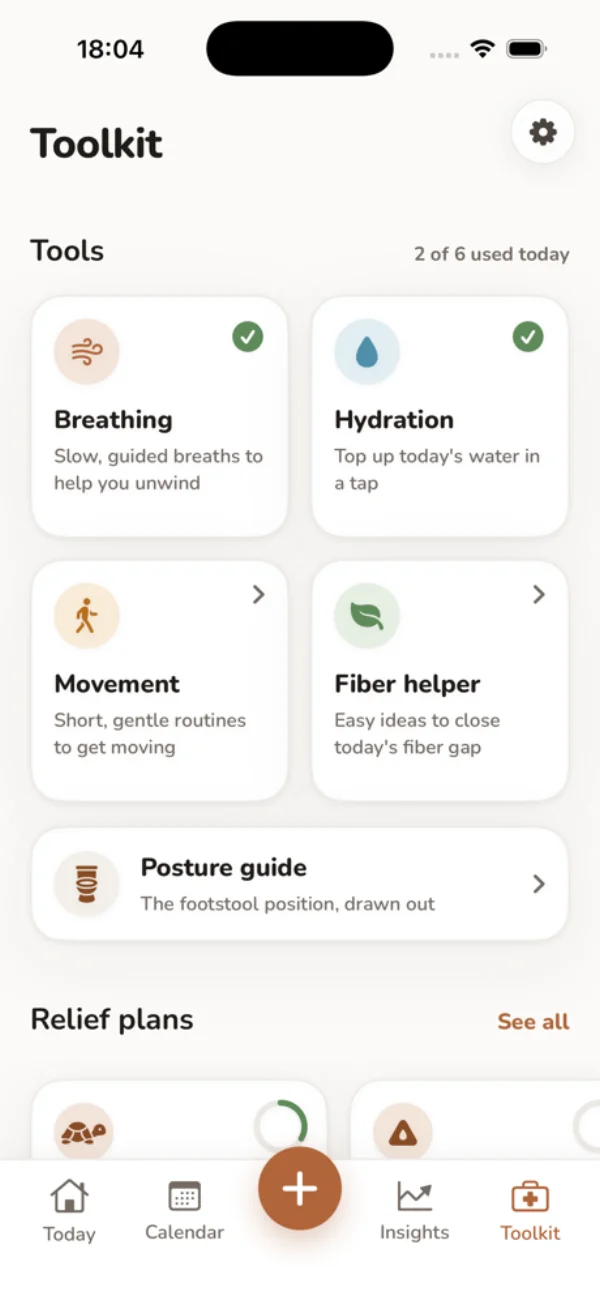
 Watch pebbles turn into something easier. Free on iPhone.Get the app
General information, not medical advice. This page can help you notice patterns and talk with a clinician. It cannot tell you what is causing a symptom.
What pebble poop is
People describe it in different ways: pebble poop, rabbit poop, little pellets, poop that comes out in small balls. On the Bristol stool chart it has a number. Type 1 is separate, hard lumps, like little pebbles (Cleveland Clinic). Our type 1 guide covers the chart side in more detail. This page is about the practical side: why it happens and what to do.
Cleveland Clinic says types 1 and 2 suggest constipation. These stools are dry, hard and difficult to pass, they probably come infrequently, and they can get like this if they spend too long traveling through your intestines.
Why poop turns into little hard balls
Mayo Clinic explains that constipation generally happens when stool moves too slowly through the large intestine. When it moves slowly, the body absorbs too much water from it, and the stool becomes hard, dry and difficult to pass. Small, separate pellets are what that looks like at its most extreme.
The NHS says constipation in adults has many possible causes and sometimes there is no obvious reason. The most common include:
- Not eating enough fiber, which is found in fruits, vegetables and cereals.
- Not drinking enough fluids.
- Not moving enough, and spending long periods sitting or lying down.
- Often ignoring the urge to go to the toilet.
- Changing your diet or daily routine. NIDDK lists travel, getting older and changing how much and what you eat among the routine changes that can affect bowel movements.
- A side effect of a medicine or supplement. Do not stop anything you have been prescribed without talking to a health professional first.
- Stress, anxiety or depression.
Pebble poop when you still go every day
A common search is pebble poop but not constipated, usually from people who still go daily. Health services do not define constipation by frequency alone. NIDDK lists the symptoms as fewer than three bowel movements a week, stools that are hard, dry or lumpy, stools that are difficult or painful to pass, or a feeling that not all stool has passed. Any one of those counts, so daily pebbles still fit.
Pebbles sometimes come with streaks of mucus. Cleveland Clinic says some clear mucus in stool is normal and that common conditions like constipation can cause mucus. Mucus that looks bloody, off-white or yellowish, or a lot of it, is worth discussing with a healthcare provider.
A practical plan to soften things up
The NHS says simple changes to your diet and lifestyle can help, and you may notice a difference within a few days, although sometimes it takes a few weeks. A sensible order to try them in:
- Step 1: add fiber gradually. NIDDK says adults should get 22 to 34 grams of fiber a day depending on age and sex, added a little at a time so your body gets used to it. Good sources include oatmeal, beans and lentils, berries, apples with the skin on, pears, carrots, broccoli and nuts.
- Step 2: drink with it. NIDDK says water and other liquids help fiber work better and make stools softer and easier to pass. MedlinePlus suggests 8 to 10 cups (2 to 2.5 L) of liquids a day, mostly water, unless a health professional has told you otherwise.
- Step 3: try fruit with skins on. MedlinePlus says most fruits help ease constipation and suggests not peeling fruits with edible skins, because a lot of the fiber is in the skin. The NHS names apples, apricots, grapes and raisins, raspberries and strawberries.
- Step 4: move most days. MedlinePlus suggests walking, swimming or something active at least 3 or 4 times a week. The NHS says a daily walk or run can help.
- Step 5: fix the toilet routine. Keep to a regular time and place, give yourself plenty of time, and do not delay when you feel the urge (NHS). NIDDK says trying 15 to 45 minutes after breakfast may help, because eating helps your colon move stool.
- Step 6: raise your knees. The NHS suggests resting your feet on a low stool, with your knees above your hips if possible.
- Step 7: ask a pharmacist if these changes are not helping. The NHS says a pharmacist can suggest a suitable laxative, and that laxatives should only be used for a short time.
Go slowly with fiber
MedlinePlus notes that eating more fiber can cause bloating and gas, which is why adding it slowly matters. A few extra grams every few days is easier on your gut than a sudden jump.
What a useful log entry looks like
Writing down the type, plus one or two words about the day before, shows you quickly whether your changes are working. For example:
- Monday 9:20 am: type 1, dark brown. Note: small pellets, strained. Two days since last one.
- Wednesday 8:10 am: type 2. Note: oats and a pear at breakfast both days, 6 glasses of water.
- Saturday 8:00 am: type 3. Note: walking at lunch all week. Easy to pass.
When to see a doctor
NIDDK says to see a doctor right away if constipation comes with bleeding from your rectum, blood in your stool, constant pain in your abdomen, being unable to pass gas, vomiting, fever, lower back pain, or losing weight without trying. It also says to see a doctor if symptoms do not go away with self-care.
The NHS suggests seeing a GP if you are regularly constipated or bloated, it is not getting better with treatment, you feel tired all the time, a medicine is causing it, or you notice sudden changes in your bowel habits. Mayo Clinic suggests an appointment if symptoms last longer than three weeks.
One less obvious sign: the NHS explains that long-term constipation can lead to faecal impaction, where poo builds up in the rectum, and the main symptom is diarrhea leaking around it. If weeks of pebbles suddenly turn into runny leaks, tell a GP. Our when to see a doctor guide has the full list.
Common questions
What does pebble poop mean?
It usually means constipation. Pebble poop is Bristol type 1, and Cleveland Clinic says types 1 and 2 suggest constipation, often because stool has spent too long traveling through the intestines.
Why is my poop like pebbles but I'm not constipated?
If you go regularly, it can feel like you are not constipated. But NIDDK counts hard, dry or lumpy stools as a symptom of constipation, even when you go often enough. Fiber, fluids and movement are still the first things to try.
Why does my poop come out like rabbit pellets?
Mayo Clinic explains that when stool moves slowly through the colon, the body absorbs too much water from it, leaving it hard and dry. Common reasons include too little fiber or fluid, too little exercise, and not using the toilet when you feel the urge.
How long does it take to get rid of pebble poop?
The NHS says you may notice a difference within a few days of changing your diet and lifestyle, but sometimes it takes a few weeks. If it is not improving, see a GP.
Is pebble poop with mucus a concern?
Some clear mucus is normal, and Cleveland Clinic says constipation itself can cause mucus. Contact a healthcare provider if there is a lot of mucus, or if it looks bloody, off-white or yellowish.
When to talk to a doctor
Contact a doctor promptly if you notice any of these. Get urgent help if you also feel faint, dizzy or very unwell.
- Blood in your stool, or black, tarry stool
- Pale, clay colored or white stool
- Losing weight without trying
- Severe or ongoing tummy pain
- A change in your usual pattern that lasts more than a few weeks
- Diarrhea with signs of dehydration, such as dizziness or very little urine
Sources
- Bristol Stool Chart, Cleveland Clinic
- Constipation: symptoms and causes, Mayo Clinic
- Constipation, NHS
- Symptoms and causes of constipation, NIDDK (NIH)
- Eating, diet and nutrition for constipation, NIDDK (NIH)
- Treatment for constipation, NIDDK (NIH)
- Constipation: self-care, MedlinePlus
- Mucus in stool, Cleveland Clinic
How this page was made. Written by the Log For Your Log team with AI drafting help, based on our in-app Learn library, then checked line by line against the sources below. Read how we write Learn.