Yellow or greasy poop: common causes and when to get it checked
Yellow poop is often about what you ate, like a fatty meal or a lot of carrots, squash or sweet potato. Greasy, pale or floating stools that keep coming back are different, and worth a conversation with a doctor. Here is how to tell the two apart, and what to note down in the meantime.
Updated November 2, 2026 · 7 min read · By the Log For Your Log team · 6 sources
 Yellow today, brown tomorrow? Free on iPhone.Get the app

General information, not medical advice. This page can help you notice patterns and talk with a clinician. It cannot tell you what is causing a symptom.
Why poop can look yellow
Poop color is usually a mix of brown, yellow and orange. Cleveland Clinic explains that the yellow and orange tones come from bile and bilirubin. Your liver makes bile and your gallbladder stores it, releasing small amounts when you eat to help break down fats. Bile gets its yellow color from bilirubin, a waste product made when red blood cells naturally break down.
So a slightly more yellow shade is not automatically a problem. Cleveland Clinic's stool color guide says yellowish poop could mean you are eating too many fatty foods or foods high in beta carotene, like carrots, yams or squash. It also says brown is the ideal color, but a few random off-color poops do not mean you are unhealthy. If your poop stays a color that is not brown, it could be a sign that something is going on.
Food causes: fatty meals and beta carotene
These are the food and drink reasons Cleveland Clinic gives for yellow stool:
- Orange and yellow vegetables. Carrots, sweet potatoes, squash and other foods high in beta carotene can make stool yellow. Cleveland Clinic says natural pigments called carotenoids give these foods their color, and they may temporarily color your stool too.
- Carrot juice. A Cleveland Clinic gastroenterologist notes that you would have to eat a lot of carrots to turn your poop orange, and that they see it more in people who drink a lot of carrot juice (Cleveland Clinic).
- Turmeric. Yellow spices like turmeric, and turmeric supplements, can also make stool yellow.
- Fatty and fried foods. The stool color guide lists foods high in fat, like fried foods, among the food causes of yellow poop.
- Some antibiotics. Cleveland Clinic says some antibiotics may tint poop yellow or green. Do not stop a prescribed medicine without talking to a health professional first.
A food tint is temporary
Cleveland Clinic says any food-related tint should disappear once the source is flushed from your system, which could take a few days.
When yellow poop is greasy
Greasy poop has its own name: steatorrhea, meaning too much fat in your stool. Cleveland Clinic describes fatty poops as looser, smellier and paler in color, like clay, and says they might float. People who notice it often describe stools that are:
- Bulky or loose
- Greasy or foamy
- Light colored
- Smelly
- Floating, or hard to flush
One greasy poop or a pattern?
This is the most useful question to ask. Cleveland Clinic says you might have an occasional fatty poop after eating a fatty meal. But if you have them consistently, it is a sign that something in your digestive system is not working right. Your body needs enzymes from the pancreas and bile from the liver to break down fats, and a problem anywhere in that chain can affect how fat is absorbed.
NIDDK lists loose, greasy, foul-smelling bowel movements among the symptoms of malabsorption, together with bloating, gas and changes in appetite. Malabsorption means your body cannot absorb enough nutrients from the food you eat.
Working out which condition is behind a pattern like this is a job for a doctor, who can arrange tests. Cleveland Clinic says if you have steatorrhea and do not know why, you should seek medical attention. It is not an emergency on its own, but it is important to find the cause.
Yellow diarrhea
Loose, watery stools can also be yellow. Cleveland Clinic says diarrhea from stomach bugs can look yellow because your intestines are moving so fast that your body does not have time to absorb the bile in the stool. Common causes include viruses such as norovirus and bacteria such as Salmonella and E. coli.
A Cleveland Clinic nurse practitioner says yellow diarrhea that starts suddenly and goes away in a few days is rarely cause for concern. Self-care ideas from the same article include cutting back on high-fat foods and dairy for a while, eating soft, bland foods, drinking plenty of water or electrolyte drinks, and avoiding alcohol and caffeinated drinks like coffee. A pharmacist can tell you whether any over-the-counter product is suitable for you.
Having your gallbladder removed is another common reason. Without a gallbladder, bile goes from your liver into your intestines all at once, and Cleveland Clinic says it is normal to have yellow diarrhea afterward while your body readjusts. For some people it becomes persistent, and cutting back on fatty food can help. If that is you, your surgical team or doctor is the right person to ask.
What to do if you notice yellow poop
A simple plan for the next few days:
- Think back two days. Carrots, sweet potato, squash, carrot juice, turmeric, or a heavy fried or fatty meal?
- Check how you feel. A Cleveland Clinic gastroenterologist suggests asking yourself how you are feeling. If you feel normal and do not have diarrhea, colored stool most often comes from something you ate (Cleveland Clinic).
- Notice the texture, not just the color. Greasy, foamy, floating or hard to flush is worth writing down every time it happens.
- Give it a few days. If the food is the reason, the color should fade once it has passed through.
- Write down your weight if it is changing. Weight loss without trying is one of the signs that needs a doctor.
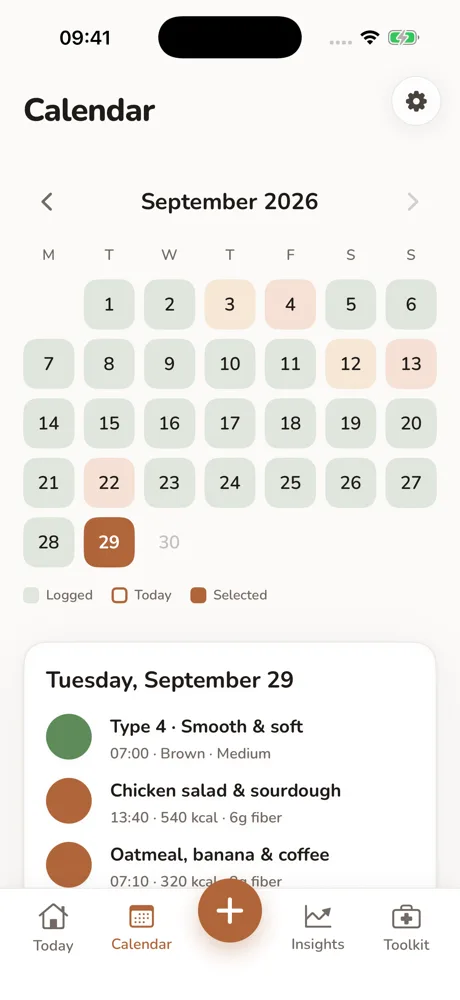
What a useful log entry looks like
Notes like these help you, and a doctor, tell a one-off from a pattern:
- Monday 8:30 am: type 4, yellow. Note: roasted squash and sweet potato last night. Feel fine.
- Thursday 1:10 pm: type 6, yellow. Note: greasy, floated, hard to flush. Fish and chips at lunch yesterday.
- Following Thursday: third greasy one this week, more bloating than usual. Booked a GP appointment.
When to see a doctor
See a healthcare provider about:
- Greasy, pale or floating stools that keep happening, especially if you do not know why (Cleveland Clinic).
- Loose, greasy stools with weight loss. NIDDK lists loose, greasy, foul-smelling bowel movements as a symptom of malabsorption, and weight loss as a symptom of chronic diarrhea.
- Diarrhea of any color lasting more than a week (Cleveland Clinic). NIDDK says adults should talk with a doctor right away if diarrhea lasts more than 2 days, or comes with high fever, six or more loose stools a day, black and tarry stools or stools with red blood or pus, severe pain in the abdomen or rectum, or signs of dehydration.
- Pale or clay-colored stools. MedlinePlus says to contact your provider if your stools are not the normal brown color for several days, and notes that yellow skin (jaundice) and dark urine can occur along with clay-colored stools.
- Color that does not go back to brown within a few days (Cleveland Clinic).
Common questions
What does yellow poop mean in adults?
Often, something you ate. Cleveland Clinic says yellowish poop could mean you are eating too many fatty foods or foods high in beta carotene like carrots, yams or squash. If it keeps happening, or is greasy, it is worth asking a doctor.
Is yellow poop normal?
Poop color is normally a mix of brown, yellow and orange, with the yellow coming from bile (Cleveland Clinic). An occasional yellow poop after certain foods is common. A color that stays, or comes with other symptoms, is a reason to check in with a provider.
What does yellow diarrhea mean?
It is often a stomach bug: diarrhea can look yellow when your intestines move too fast for the bile in it to be absorbed. Cleveland Clinic says yellow diarrhea that starts suddenly and goes away in a few days is rarely a concern, but to see a provider if diarrhea lasts more than a week.
Why is my poop yellow and greasy?
Greasy, pale stool that might float can mean too much fat in your poop, called steatorrhea. Cleveland Clinic says an occasional one after a fatty meal can happen, but if it happens consistently, something in your digestive system is not working right and you should get it checked.
Can carrots make your poop yellow or orange?
Yes. Carrots and other foods high in beta carotene can tint stool yellow or orange. A Cleveland Clinic gastroenterologist says it usually takes a lot, and that they see it more in people who drink a lot of carrot juice (Cleveland Clinic).
When to talk to a doctor
Contact a doctor promptly if you notice any of these. Get urgent help if you also feel faint, dizzy or very unwell.
- Blood in your stool, or black, tarry stool
- Pale, clay colored or white stool
- Losing weight without trying
- Severe or ongoing tummy pain
- A change in your usual pattern that lasts more than a few weeks
- Diarrhea with signs of dehydration, such as dizziness or very little urine
Sources
- What does my stool (poop) color mean?, Cleveland Clinic
- 4 things that cause yellow diarrhea, Cleveland Clinic
- Steatorrhea (fatty stool), Cleveland Clinic
- Can food change the color of your poop?, Cleveland Clinic
- Symptoms and causes of diarrhea, NIDDK (NIH)
- Stools: pale or clay-colored, MedlinePlus
How this page was made. Written by the Log For Your Log team with AI drafting help, then checked line by line against the sources below. Read how we write Learn.