Undigested food in stool: what it means
Spotting corn or bits of vegetable in the toilet is common and usually harmless. Here is why some food comes out looking whole, what helps, and the signs that mean it is time to get checked.
Updated October 21, 2026 · 6 min read · By the Log For Your Log team · 8 sources
 Keep a quick note when something looks different. Free on iPhone.Get the app

General information, not medical advice. This page can help you notice patterns and talk with a clinician. It cannot tell you what is causing a symptom.
Is undigested food in stool normal?
Usually, yes. Mayo Clinic explains that you may sometimes see undigested food fragments in stool, and that this is usually high fiber vegetable matter, which usually is not broken down and absorbed in your digestive tract.
Mayo Clinic is also clear about when it stops being an everyday thing: undigested food in stool is not a problem unless it comes with lasting diarrhea, weight loss or other changes in your bowel habits. That one sentence is the most useful thing to remember from this page.
Why some food comes out looking whole
Digestion is a relay. NIDDK explains that it starts in your mouth when you chew, that your small intestine absorbs most of the nutrients in your food, and that your large intestine absorbs water and turns what is left into stool. NIDDK lists the waste products of digestion as including undigested parts of food, fluid and older cells from the lining of your gut, and says parts of food that are still too large become stool.
Fiber is the main reason some pieces survive the trip. MedlinePlus describes two forms. Soluble fiber attracts water and turns to gel during digestion. Insoluble fiber does not dissolve in water. It is found in foods such as wheat bran, vegetables and whole grains, and it adds bulk to stool and helps food move more quickly through the stomach and intestines. MedlinePlus also notes that taking the peels off fruits and vegetables reduces the amount of fiber you get, which tells you how much of it sits in skins and peels.
Why corn shows up whole
Corn is the classic example. A registered dietitian quoted by Cleveland Clinic explains that your digestive system breaks down the fleshy inside of the corn kernel, which has the important nutrients, and that the kernels you see in your poop are the waxy, tough outer shell made of cellulose. Your body cannot digest these fibrous shells.
So seeing corn does not mean you got nothing from it. Cleveland Clinic adds that those shells ferment in your intestines, which is why you may feel gassy after eating a lot of corn. If gas is part of your picture too, our guide to bloating after eating may help.
What you can do
If you are otherwise well, there is often nothing to fix. A few small habits can reduce how much you notice, and a short log tells you whether there is a pattern worth mentioning to a doctor.
| When | What you log | Note |
|---|---|---|
| Saturday, 18:30 | Dinner: tacos with corn and salad | Ate quickly before going out |
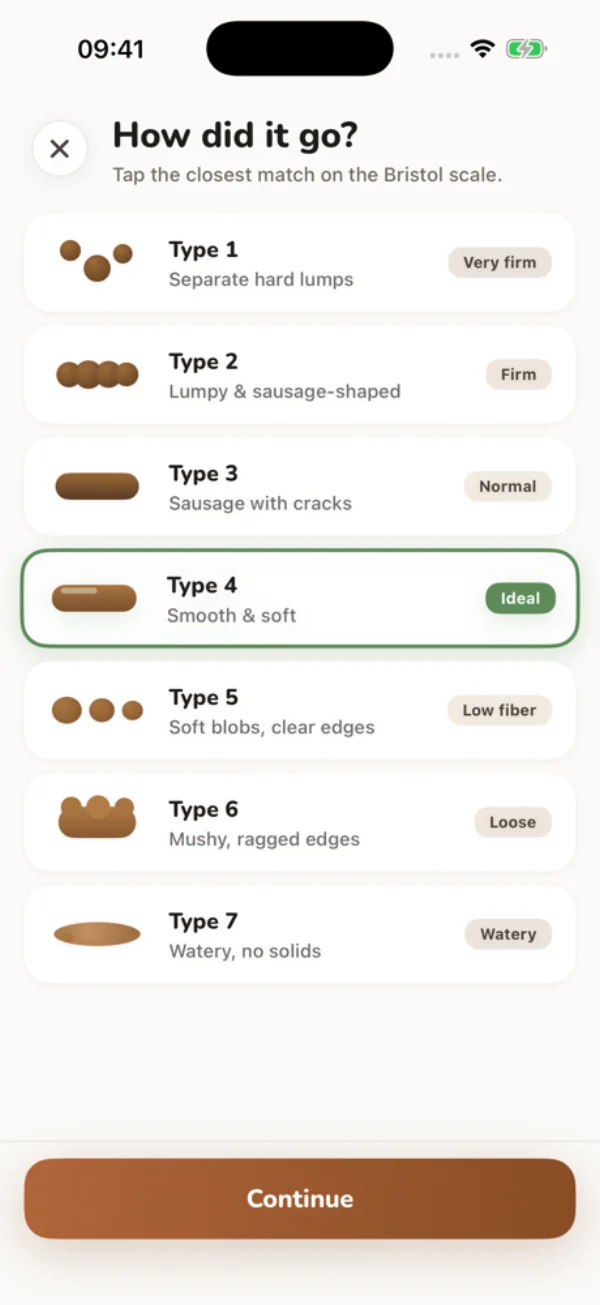
| Sunday, 09:15 | Bowel movement: type 4, brown | Some corn visible. Otherwise normal, felt fine |
| Monday, 08:40 | Bowel movement: type 4, brown | Nothing unusual |
- Chew well. Mayo Clinic says undigested food is at times a sign of poor chewing and fast eating, and to make sure you chew your food well.
- Slow down. NIDDK suggests eating slowly and, when possible, sitting down to eat instead of eating on the run. It gives this advice for gas, and it also gives you more time to chew.
- Keep the fiber. MedlinePlus says fiber aids digestion and helps prevent constipation. Seeing some of it again is not a reason to cut it out.
- Note it, then look for company. Log the bowel movement, write what you saw in a note, and record any other symptoms. The question that matters is whether it ever comes with diarrhea, greasy stools or weight loss.
One sighting is not a pattern
A single day with visible corn after a corn heavy meal tells you about the corn. What is worth tracking is whether undigested food keeps appearing alongside loose stools, greasy stools or weight loss.
Undigested food with diarrhea
Mayo Clinic names lasting diarrhea as one of the reasons to talk to a health care provider about undigested food. A day of loose stools after a stomach bug or a big meal is different from loose stools that keep going.
NIDDK says adults should talk with a doctor right away if they have diarrhea lasting more than 2 days, six or more loose stools a day, or a high fever. NIDDK also lists severe pain in the abdomen or rectum, stools that are black and tarry or contain red blood or pus, frequent vomiting, a change in mental state and symptoms of dehydration as reasons to get help right away. For more on loose stools, see Bristol type 6.
Greasy stools and weight loss
Sometimes the issue is not a piece of food you can see but how well food is being absorbed. MedlinePlus explains that with a malabsorption syndrome, your small intestine cannot absorb nutrients from foods, and that symptoms often include chronic diarrhea, abnormal stools, weight loss and gas.
NIDDK lists the symptoms of malabsorption as bloating, changes in appetite, gas, loose, greasy, foul smelling bowel movements, and weight loss. MedlinePlus adds that floating, greasy stools that are foul smelling may be due to severe fat malabsorption, particularly if you are losing weight. Our page on floating poop covers that in more detail. These signs are for a doctor to assess. Food changes at home are not a substitute.
When to see a doctor
Talk to a doctor if undigested food in your stool comes with any of these:
- Lasting diarrhea, or any of the NIDDK warning signs above.
- Weight loss you did not try for.
- Greasy, foul smelling stools, or stools that float and are hard to explain by what you ate.
- Other changes in your bowel habits that do not settle (Mayo Clinic).
- Blood in your stool, black stool, or anything else on our when to see a doctor list.
Common questions
Is it normal to see undigested food in your poop?
Yes, in most cases. Mayo Clinic says it is usually high fiber vegetable matter that is not broken down and absorbed, and that it is not a problem unless it comes with lasting diarrhea, weight loss or other changes in your bowel habits.
Why is there undigested food in my diarrhea?
It can happen with a short bout of loose stools, and on its own it does not tell you the cause. Mayo Clinic says undigested food with lasting diarrhea is a reason to talk to your health care provider. NIDDK says adults should talk with a doctor right away if diarrhea lasts more than 2 days.
Why does corn come out whole?
What you see is the tough outer shell. Cleveland Clinic explains that your body digests the fleshy inside of the kernel, which holds the nutrients, while the waxy shell is made of cellulose that your body cannot digest.
Why is there always undigested food in my stool?
If you eat a lot of vegetables and other high fiber foods and feel well, seeing some of it regularly can simply reflect your diet. Mayo Clinic also points to poor chewing and fast eating. If it comes with diarrhea, weight loss or other changes in your bowel habits, see a doctor.
Does undigested food mean I am not absorbing nutrients?
Not usually. NIDDK explains that the small intestine absorbs most of the nutrients in your food, and fibrous parts that are not digested become stool. Signs that absorption may be a problem include loose, greasy, foul smelling stools, bloating, gas and weight loss, and those need a doctor.
When to talk to a doctor
Contact a doctor promptly if you notice any of these. Get urgent help if you also feel faint, dizzy or very unwell.
- Blood in your stool, or black, tarry stool
- Pale, clay colored or white stool
- Losing weight without trying
- Severe or ongoing tummy pain
- A change in your usual pattern that lasts more than a few weeks
- Diarrhea with signs of dehydration, such as dizziness or very little urine
Sources
- Undigested food in stool: What does it mean?, Mayo Clinic
- Is corn good for you?, Cleveland Clinic
- Your digestive system and how it works, NIDDK (NIH)
- Fiber, MedlinePlus (NIH)
- Symptoms and causes of diarrhea, NIDDK (NIH)
- Eating, diet and nutrition for gas in the digestive tract, NIDDK (NIH)
- Malabsorption syndromes, MedlinePlus (NIH)
- Stools, floating, MedlinePlus (NIH)
How this page was made. Written by the Log For Your Log team with AI drafting help, based on our in-app Learn library, then checked line by line against the sources below. Read how we write Learn.