Pooping after every meal: is it normal?
Finish a meal, and a few minutes later you need the bathroom. It can feel like food is going straight through you, but that is not what is happening. Here is the normal reflex behind it, what can make it stronger, and the signs that point to something worth checking.
Updated October 29, 2026 · 7 min read · By the Log For Your Log team · 6 sources
 Know your own rhythm. Free on iPhone.Get the app
General information, not medical advice. This page can help you notice patterns and talk with a clinician. It cannot tell you what is causing a symptom.
Is pooping after every meal normal?
For many people, yes. Cleveland Clinic says that if you often have to poop right after you eat, you might wonder whether food just goes straight through you. It does not. It is your gastrocolic reflex, an automatic trigger in your digestive system that tells your bowels to move old food out to make room for the new. Cleveland Clinic calls it perfectly normal, and says it can differ between people.
How often is normal varies a lot too. Continence Health Australia says most people pass poo regularly, usually from 3 times a day to 3 times a week, and that healthy poo is comfortable and easy to pass, with a soft, well-formed shape. Going after breakfast, lunch and dinner can sit comfortably inside that range, as long as the stools themselves are formed and the pattern is usual for you.
How the gastrocolic reflex works
The name says it: gastro for stomach, colic for colon. Cleveland Clinic explains that when food enters your stomach, nerves send signals to the muscles in your colon that trigger them to start moving. When a new batch of food starts being digested, your body moves the last batch out to make room.
- The trigger is stretch. The main trigger is your stomach stretching to make room for food. A larger meal means more stretching.
- The colon responds with big waves. Your colon answers with large, wave-like contractions called mass movements.
- Hormones join in. Gastrin and cholecystokinin are released as food arrives and moves on, and they help trigger contractions.
- Richer meals can mean a stronger push. Cleveland Clinic says researchers have found that a higher-calorie meal with more fat and protein triggers more digestive hormones, which seem to stimulate greater contractions in the small intestine and colon.
It is not the meal you just ate
What you pass after a meal is older waste that was already in your colon. The reflex is your gut making room, not rushing the new food through.
How soon after eating it happens
Cleveland Clinic says you may feel movement in your colon within minutes of eating, or within about an hour. That movement does not always mean you will poop straight away. The reflex can last anywhere from a few minutes to a few hours, and it tends to work more slowly in adults than in young children.
The same idea shows up in advice for constipation. NIDDK says trying to have a bowel movement 15 to 45 minutes after breakfast may help people with constipation, because eating helps your colon move stool. For some people the after-meal urge is a nuisance. For others it is a helpful, predictable cue.
What can make the urge stronger
If the urge after meals feels too strong, too fast or uncomfortable, Cleveland Clinic says it could be related to what you have just eaten. Things it names include:
- High-calorie and greasy foods. These can cause greater contractions in your digestive system.
- Spicy foods. These are also on Cleveland Clinic's list.
- Alcohol and caffeine. Cleveland Clinic says drinks containing alcohol or caffeine can make you poop.
- Large meals. More food means more stomach stretch, which is the main trigger for the reflex.
- Hidden food intolerances. These could also cause this reaction.
What to try if it bothers you
Cleveland Clinic suggests noticing which foods trigger your symptoms and avoiding those foods, and says that for adults with temporary symptoms, changes in eating patterns are most likely to help. A practical way to do that:
- Log a week of meals and bathroom trips. Note the time, what you ate and drank, and how urgent the trip felt.
- Look for repeat offenders. Coffee, a big greasy lunch, a spicy dinner or alcohol are common suspects from Cleveland Clinic's list.
- Test one change at a time. For example, a smaller lunch or a less greasy option for a week, then compare.
- Plan around it if it is just your rhythm. If the trips are comfortable and the stools are formed, knowing your pattern can simply make the day easier.
- Do not cut out whole food groups on a hunch. If you suspect an intolerance, talk to a doctor or dietitian before making big changes.
What a useful log entry looks like
Short notes like these show whether you are looking at a normal reflex or a pattern that needs attention:
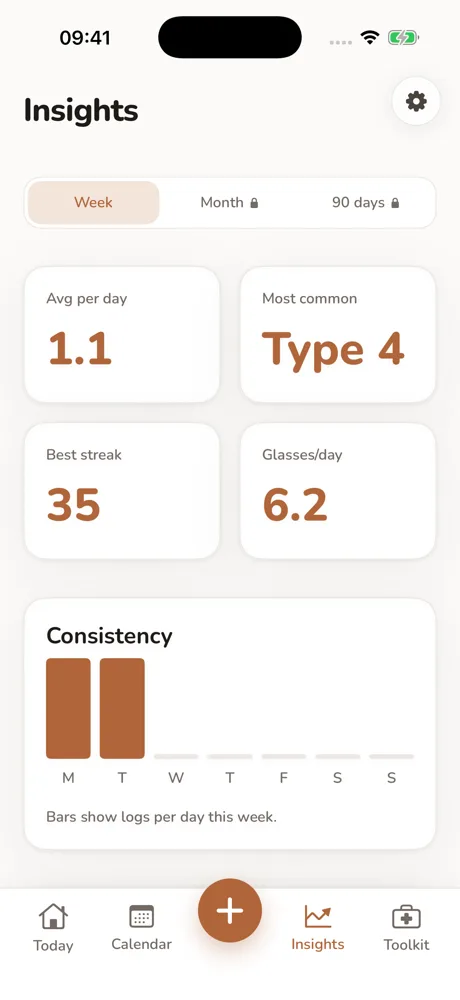
- Monday 8:20 am: type 4, about 20 minutes after breakfast and coffee. Note: no rush, easy.
- Monday 1:30 pm: type 5. Note: urgent, straight after a large fried lunch.
- Over two weeks: type 6 or 7 after most meals, some cramping, lost a few pounds. Booked a doctor's appointment.
When frequent loose stools are a different story
The reflex explains the timing. It does not explain watery stools. NIDDK defines diarrhea as passing loose, watery stools three or more times a day, or more often than is normal for you. Acute diarrhea typically lasts less than a week and goes away on its own. Persistent diarrhea lasts longer than 2 weeks and less than 4 weeks, and chronic diarrhea lasts at least 4 weeks.
Cleveland Clinic says that if you frequently feel an urgent need to poop right after eating and the movements in your bowels feel very strong, you might have an overactive gastrocolic reflex. Occasional urgent bowel movements can happen for lots of reasons, including certain foods, medicines, infections and stress. If you have these symptoms all the time, it could be a type of functional gastrointestinal disorder, such as irritable bowel syndrome, which a doctor can assess.
One specific situation: after gallbladder removal, bile goes directly from your liver to your intestines all at once. Cleveland Clinic says it is normal to have loose, yellow stools afterward while your body readjusts, and that for some people it becomes persistent. Cutting back on high-fat food can help, and your doctor can advise further.
When to see a doctor
Cleveland Clinic says to see a healthcare provider if your symptoms have lasted several weeks and changes to your eating habits have not helped, or if your symptoms include colon spasms, frequent diarrhea or weight loss.
NIDDK says adults should talk with a doctor right away if they have diarrhea lasting more than 2 days, a high fever, six or more loose stools per day, frequent vomiting, severe pain in the abdomen or rectum, stools that are black and tarry or contain red blood or pus, or signs of dehydration such as extreme thirst, urinating less than usual, feeling dizzy or dark-colored urine. It lists weight loss as a symptom of chronic diarrhea.
Common questions
Is it normal to poop after every meal?
It can be. Cleveland Clinic says needing to poop soon after eating is the gastrocolic reflex, which is perfectly normal and differs between people. It is worth checking with a doctor if the stools are loose, the urge is very strong all the time, or you are losing weight.
Does pooping after every meal mean food is going straight through me?
No. Cleveland Clinic explains that food entering your stomach signals your colon to move older waste out to make room for the new batch. What you pass after a meal was already in your colon.
Is pooping after every meal good or bad?
Neither, on its own. Most people poo anywhere from 3 times a day to 3 times a week (Continence Health Australia). What matters more is whether the stools are comfortable and formed, and whether the pattern is new or comes with other symptoms.
Why do I poop after every meal since my gallbladder was removed?
Without a gallbladder, bile flows into your intestines all at once rather than in small amounts. Cleveland Clinic says loose, yellow stools are normal while your body readjusts, and that cutting back on high-fat food can help. If it persists, talk to your doctor.
When should I worry about pooping after eating?
Cleveland Clinic suggests seeing a provider if symptoms last several weeks despite changes to your eating habits, or come with colon spasms, frequent diarrhea or weight loss. NIDDK says to talk with a doctor right away about diarrhea lasting more than 2 days, high fever, blood or pus in stools, or signs of dehydration.
When to talk to a doctor
Contact a doctor promptly if you notice any of these. Get urgent help if you also feel faint, dizzy or very unwell.
- Blood in your stool, or black, tarry stool
- Pale, clay colored or white stool
- Losing weight without trying
- Severe or ongoing tummy pain
- A change in your usual pattern that lasts more than a few weeks
- Diarrhea with signs of dehydration, such as dizziness or very little urine
Sources
- Gastrocolic reflex, Cleveland Clinic
- Supporting bowel control, Continence Health Australia
- Treatment for constipation, NIDDK (NIH)
- Definition and facts for diarrhea, NIDDK (NIH)
- Symptoms and causes of diarrhea, NIDDK (NIH)
- 4 things that cause yellow diarrhea, Cleveland Clinic
How this page was made. Written by the Log For Your Log team with AI drafting help, then checked line by line against the sources below. Read how we write Learn.